
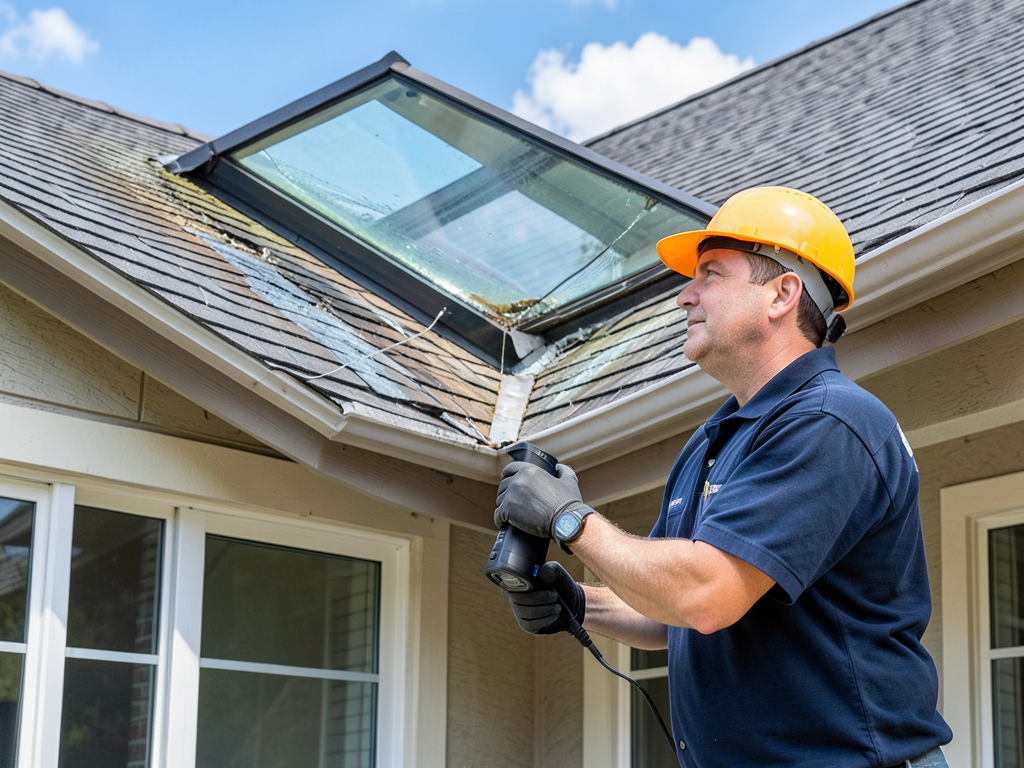
How to spot hail cracks on your Deerfield skylights before they start leaking
San Antonio’s location in the heart of Texas’s hail alley means your skylights face constant assault from spring storms. Deerfield skylights, common in many San Antonio neighborhoods, can develop hairline cracks from hail impact that you might not notice until water starts dripping through your ceiling. These microscopic fractures often hide beneath the surface, allowing moisture to seep in slowly and cause extensive damage to your home’s interior. How to get your San Antonio roof fixed after a major hail storm.
The key to preventing costly water damage lies in knowing exactly what to look for during your inspection. Unlike roof shingles where damage is often visible from the ground, skylight hail damage requires a closer examination. The tempered glass or acrylic domes used in Deerfield skylights can develop stress fractures that spider-web across the surface, compromising the seal and creating entry points for water.. Read more about Are recycled rubber shingles a viable option for eco-conscious homeowners in Lone Star?.
Understanding Deerfield skylight construction and hail vulnerability
Deerfield skylights typically feature either tempered glass or acrylic glazing systems mounted in aluminum frames with rubber seals. The glass versions offer better impact resistance but can still shatter under large hail. Acrylic domes flex more but develop micro-cracks that spread over time. Both materials face unique challenges in San Antonio’s climate where intense UV radiation accelerates material degradation. What to do when your San Antonio roof starts leaking in the middle of a storm.
The aluminum frames expand and contract with temperature swings common in South Texas, creating stress points where the frame meets the glazing. When hail strikes these weakened areas, the impact can cause immediate cracking or create hairline fractures that grow with each thermal cycle. The rubber seals around the frame also deteriorate from UV exposure, becoming brittle and losing their watertight integrity.
Visual inspection techniques for hail damage detection
Start your inspection during daylight hours when natural light helps reveal surface imperfections. Look for these specific signs of hail impact on your Deerfield skylights:
- Spider-web patterns radiating from impact points
- Clouded or hazy areas that indicate seal failure
- Small dimples or craters in acrylic domes
- White powdery residue along frame edges
- Visible gaps where the frame meets the roof
Use a flashlight at an angle to highlight surface irregularities. Hold the light parallel to the skylight surface and move it slowly across the area. Cracks and fractures will cast tiny shadows that become visible under this lighting technique. Pay special attention to corners and edges where stress concentrates.
Acrylic vs. glass skylight damage patterns
Acrylic skylights show different damage signatures than glass units. The flexible nature of acrylic means hail often creates small dents or dimples rather than sharp cracks. These impact points may appear as slightly darker or lighter spots where the material has compressed. Over time, these areas can develop micro-fractures that spread into larger cracks.. Read more about Why even small hail storms in the Lower South Side deserve a professional roof check.
Glass skylights typically show more dramatic damage patterns. Hail impacts create starburst patterns with radiating lines extending outward from the impact point. Tempered glass may develop small chips or complete fractures depending on hail size and velocity. Laminated glass versions might show delamination between layers where moisture has entered through compromised seals.
Hidden damage indicators you might miss
Not all hail damage creates immediately visible surface cracks. Some of the most serious issues hide beneath the surface. Check for these subtle indicators of compromised skylight integrity:
- Fogging between double-pane glass units
- Condensation forming on interior surfaces during temperature changes
- Drafts coming from around the skylight frame
- Water stains on interior ceiling surfaces near the skylight
- Peeling paint or water-damaged drywall around the skylight opening
These signs often indicate seal failure or frame damage that allows moisture intrusion. The damage may have occurred months ago during a previous storm, but only becomes apparent when seasonal temperature changes cause materials to expand and contract.
Weather factors affecting skylight damage in San Antonio
San Antonio’s unique weather patterns create specific challenges for skylight durability. The combination of intense UV radiation, frequent hail storms, and rapid temperature fluctuations accelerates material breakdown. Summer temperatures often exceed 100°F, causing thermal expansion that stresses already weakened areas. How to Get Your Commercial Flat Roof Ready for San Antonio Summer Storms.
Spring hailstorms typically bring stones ranging from pea-sized to golf ball dimensions. Larger stones can crack even impact-resistant glass, while smaller hail creates cumulative damage through repeated impacts. The high humidity levels common in South Texas also contribute to seal deterioration and promote mold growth in areas where moisture has entered.
Professional inspection tools and techniques
Professional roofers use specialized equipment to detect skylight damage that homeowners might miss. Thermal imaging cameras can reveal temperature differences indicating moisture presence or air leaks. Moisture meters measure water content in surrounding materials, helping identify areas where leaks have occurred.
Endoscopic cameras allow inspection of hard-to-reach areas around the skylight frame and flashing. These small cameras can be inserted into gaps to check for water damage, mold growth, or structural deterioration that isn’t visible from the exterior. Some professionals also use drones equipped with high-resolution cameras to inspect skylights on steep or multi-story roofs.
Emergency tarping procedures for compromised skylights
If you discover active leaks or severe damage during your inspection, temporary protection prevents further interior damage. For acrylic skylights, heavy-duty plastic sheeting secured with waterproof tape can provide short-term protection. Glass skylights may require more substantial covering due to weight considerations.
Measure your skylight dimensions before purchasing emergency materials. Standard residential skylights typically range from 2×4 feet to 4×6 feet. Cut your protective covering at least 12 inches larger than the skylight dimensions to ensure complete coverage. Secure the covering with waterproof tape or temporary fasteners, being careful not to damage the skylight frame.
Insurance claim documentation for skylight damage
Proper documentation strengthens your insurance claim for skylight hail damage. Take clear, well-lit photographs from multiple angles showing the damage extent. Include close-up shots of specific cracks, impact points, and any water damage to interior surfaces. Time-stamp your photos when possible.
Document the date and approximate time of the damaging storm. Check local weather reports for hail size and storm intensity data. This information helps establish the cause of damage and supports your claim that the damage resulted from a covered peril rather than pre-existing conditions.
When to call a professional inspector
Some skylight damage situations require immediate professional attention. Contact a qualified inspector if you notice any of these conditions:
- Active water dripping from the skylight
- Large cracks spanning more than 6 inches
- Frame separation from the roof structure
- Visible mold growth around the skylight opening
- Multiple skylights showing similar damage patterns
Professional inspectors can also identify structural issues that might not be immediately apparent. They understand how skylight damage relates to overall roof system integrity and can recommend appropriate repair or replacement strategies. EPA building materials guidance.
Prevention strategies for future storm protection
While you can’t prevent hail from falling, you can minimize future skylight damage through proactive measures. Consider installing impact-resistant skylight covers during hail season. These clear polycarbonate shields attach over existing skylights and absorb hail impact without compromising light transmission.
Regular maintenance extends skylight lifespan and helps identify developing issues before they become major problems. Clean your skylights twice yearly, checking seals and flashing during each cleaning. Apply UV-protective coatings to acrylic domes to slow material degradation from sun exposure.
Local building code considerations in San Antonio
San Antonio’s building codes include specific requirements for skylight installation and repair. The city follows the International Building Code with local amendments addressing South Texas weather conditions. Skylight replacements must meet current energy efficiency standards and wind load requirements.
Work in historic districts or areas with strict architectural guidelines may require additional approvals. Check with the City of San Antonio Development Services Department before undertaking major skylight repairs or replacements. Some neighborhoods also have homeowners association rules governing exterior modifications.
Cost factors for skylight repair vs. replacement
The extent of hail damage often determines whether repair or replacement makes more economic sense. Minor seal damage or small cracks might be repairable for a few hundred dollars. However, extensive cracking, frame damage, or multiple impact points usually necessitates complete replacement.
Replacement costs vary based on skylight size, material selection, and installation complexity. Standard replacement units typically range from $800 to $2,500 installed, while custom or high-performance models can exceed $4,000. Factor in potential interior repair costs if water damage has affected ceiling or wall materials. How much a new roof actually costs in San Antonio right now.
Frequently Asked Questions
How can I tell if my skylight damage is from hail or normal wear?
Hail damage typically shows concentrated impact patterns with multiple dents or cracks in a specific area. Normal wear creates more uniform deterioration across the entire surface. Hail impacts often leave distinct crater marks or starburst crack patterns that differ from gradual material breakdown.
Will my homeowner’s insurance cover skylight hail damage?
Most standard homeowner’s insurance policies cover hail damage to skylights as part of the roof system. However, some policies have separate deductibles for wind/hail damage that may be higher than your standard deductible. Check your policy details or contact your insurance agent for specific coverage information.
How long does skylight hail damage inspection take?
A thorough skylight inspection typically requires 30 to 60 minutes per unit. This includes exterior examination, interior checks for water damage, and documentation of findings. Complex roof configurations or multiple skylights may require additional time.
Can I repair skylight hail cracks myself?
Minor seal repairs might be DIY-friendly, but structural glass or acrylic repairs require professional expertise. Improper repairs can void warranties and create larger problems. For safety and warranty reasons, structural damage should be handled by qualified professionals. Understanding Roof Warranties.
Take action before small cracks become big problems
Deerfield skylights in San Antonio homes face constant threat from spring hailstorms, but early detection prevents minor damage from becoming major headaches. Your inspection today could save thousands in interior water damage repairs tomorrow. The combination of proper inspection techniques, timely maintenance, and professional assessment when needed creates a comprehensive protection strategy.
Don’t wait for the next storm to reveal hidden damage. Schedule your professional skylight inspection now while conditions are dry. Our experienced technicians understand San Antonio’s unique weather challenges and can identify potential problems before they cause interior damage.
Call Summit Roofing San Antonio today at (726) 256-6199 to schedule your comprehensive skylight hail damage inspection. We’ll help you protect your home and avoid costly repairs from undetected skylight damage.
- Schedule inspection timing
Plan your inspection during daylight hours with clear weather for best visibility. Early morning or late afternoon light often reveals surface imperfections most clearly.
- Gather inspection tools
Collect a flashlight, binoculars for high skylights, notepad for documentation, and camera for photos. Wear non-slip shoes if accessing the roof.
- Examine exterior surface
Check for cracks, dents, discoloration, or seal deterioration. Use angled lighting to highlight surface irregularities. Document all findings with photos.
- Check interior signs
Look for water stains, condensation, drafts, or mold around the skylight opening. These indicate seal failure or frame damage.
- Test functionality
If your skylight opens, check the operation mechanism and weather seals. Sticking or grinding indicates potential mechanical issues.
- Document findings
Create a written report with photos, measurements, and damage descriptions. This documentation helps with insurance claims if needed. For more information, visit FEMA hail damage resources.
You may also find this helpful. Upgrading to High-Impact Attic Vents to Prevent Hail Infiltration.
{
“@context”: “https://schema.org”,
“@type”: “BlogPosting”,
“headline”: “How to spot hail cracks on your Deerfield skylights before they start leaking”,
“description”: “Learn how to identify hail damage on Deerfield skylights before leaks start. San Antonio’s hail-prone climate makes early detection critical for preventing costly repairs.”,
“wordCount”: 1902,
“datePublished”: “2026-06-16T09:18:00.000Z”,
“dateModified”: “2026-06-16T09:18:00.000Z”,
“inLanguage”: “en-US”,
“mainEntityOfPage”: {
“@type”: “WebPage”,
“@id”: “https://summitroofingsanantonio.com”
},
“publisher”: {
“@type”: “LocalBusiness”,
“name”: “Summit Roofing San Antonio”,
“url”: “https://summitroofingsanantonio.com”
},
“author”: {
“@type”: “Organization”,
“name”: “Summit Roofing San Antonio”,
“url”: “https://summitroofingsanantonio.com”
},
“image”: {
“@type”: “ImageObject”,
“url”: “https://summitroofingsanantonio.com/wp-content/uploads/2026/03/how-to-spot-hail-cracks-on-your-deerfield-skylight-1.png”
}
}
{
“@context”: “https://schema.org”,
“@type”: “RoofingContractor”,
“name”: “Summit Roofing San Antonio”,
“url”: “https://summitroofingsanantonio.com”,
“address”: {
“@type”: “PostalAddress”,
“addressLocality”: “San Antonio”
},
“areaServed”: {
“@type”: “City”,
“name”: “San Antonio”
}
}
{
“@context”: “https://schema.org”,
“@type”: “FAQPage”,
“mainEntity”: [
{
“@type”: “Question”,
“name”: “How can I tell if my skylight damage is from hail or normal wear?”,
“acceptedAnswer”: {
“@type”: “Answer”,
“text”: “Hail damage typically shows concentrated impact patterns with multiple dents or cracks in a specific area. Normal wear creates more uniform deterioration across the entire surface. Hail impacts often leave distinct crater marks or starburst crack patterns that differ from gradual material breakdown.”
}
},
{
“@type”: “Question”,
“name”: “Will my homeowner’s insurance cover skylight hail damage?”,
“acceptedAnswer”: {
“@type”: “Answer”,
“text”: “Most standard homeowner’s insurance policies cover hail damage to skylights as part of the roof system. However, some policies have separate deductibles for wind/hail damage that may be higher than your standard deductible. Check your policy details or contact your insurance agent for specific coverage information.”
}
},
{
“@type”: “Question”,
“name”: “How long does skylight hail damage inspection take?”,
“acceptedAnswer”: {
“@type”: “Answer”,
“text”: “A thorough skylight inspection typically requires 30 to 60 minutes per unit. This includes exterior examination, interior checks for water damage, and documentation of findings. Complex roof configurations or multiple skylights may require additional time.”
}
},
{
“@type”: “Question”,
“name”: “Can I repair skylight hail cracks myself?”,
“acceptedAnswer”: {
“@type”: “Answer”,
“text”: “Minor seal repairs might be DIY-friendly, but structural glass or acrylic repairs require professional expertise. Improper repairs can void warranties and create larger problems. For safety and warranty reasons, structural damage should be handled by qualified professionals. Understanding Roof Warranties.”
}
}
]
}
{
“@context”: “https://schema.org”,
“@type”: “HowTo”,
“name”: “How to inspect your skylight for hail damage”,
“step”: [
{
“@type”: “HowToStep”,
“position”: 1,
“name”: “Schedule inspection timing”,
“text”: “Plan your inspection during daylight hours with clear weather for best visibility. Early morning or late afternoon light often reveals surface imperfections most clearly.”
},
{
“@type”: “HowToStep”,
“position”: 2,
“name”: “Gather inspection tools”,
“text”: “Collect a flashlight, binoculars for high skylights, notepad for documentation, and camera for photos. Wear non-slip shoes if accessing the roof.”
},
{
“@type”: “HowToStep”,
“position”: 3,
“name”: “Examine exterior surface”,
“text”: “Check for cracks, dents, discoloration, or seal deterioration. Use angled lighting to highlight surface irregularities. Document all findings with photos.”
},
{
“@type”: “HowToStep”,
“position”: 4,
“name”: “Check interior signs”,
“text”: “Look for water stains, condensation, drafts, or mold around the skylight opening. These indicate seal failure or frame damage.”
},
{
“@type”: “HowToStep”,
“position”: 5,
“name”: “Test functionality”,
“text”: “If your skylight opens, check the operation mechanism and weather seals. Sticking or grinding indicates potential mechanical issues.”
},
{
“@type”: “HowToStep”,
“position”: 6,
“name”: “Document findings”,
“text”: “Create a written report with photos, measurements, and damage descriptions. This documentation helps with insurance claims if needed. For more information, visit FEMA hail damage resources.”
}
],
“image”: “https://summitroofingsanantonio.com/wp-content/uploads/2026/03/how-to-spot-hail-cracks-on-your-deerfield-skylight-1.png”
}
{
“@context”: “https://schema.org”,
“@type”: “BreadcrumbList”,
“itemListElement”: [
{
“@type”: “ListItem”,
“position”: 1,
“name”: “Home”,
“item”: “https://summitroofingsanantonio.com”
},
{
“@type”: “ListItem”,
“position”: 2,
“name”: “Blog”,
“item”: “https://summitroofingsanantonio.com/blog”
},
{
“@type”: “ListItem”,
“position”: 3,
“name”: “How to spot hail cracks on your Deerfield skylights before they start leaking”
}
]
}
{
“@context”: “https://schema.org”,
“@type”: “Service”,
“serviceType”: “Roofing”,
“provider”: {
“@type”: “LocalBusiness”,
“name”: “Summit Roofing San Antonio”,
“url”: “https://summitroofingsanantonio.com”
},
“areaServed”: {
“@type”: “City”,
“name”: “San Antonio”
},
“description”: “Learn how to identify hail damage on Deerfield skylights before leaks start. San Antonio’s hail-prone climate makes early detection critical for preventing costly repairs.”
}