




Menu

24 Hour Roofer in San Antonio – Emergency Response Teams Dispatched in Under 60 Minutes

When storm damage, sudden leaks, or structural failure strike your San Antonio property, Summit Roofing San Antonio deploys certified emergency roofing contractors around the clock to stop water intrusion and protect your investment before sunrise.

Slider Image 1
Slider Image 2
Slider Image 3
Slider Image 4
Slider Image 5
Slider Image 7
Slider Image 8
Slider Image 9
Slider Image 10
Slider Image 11

Why San Antonio Roofs Fail After Dark

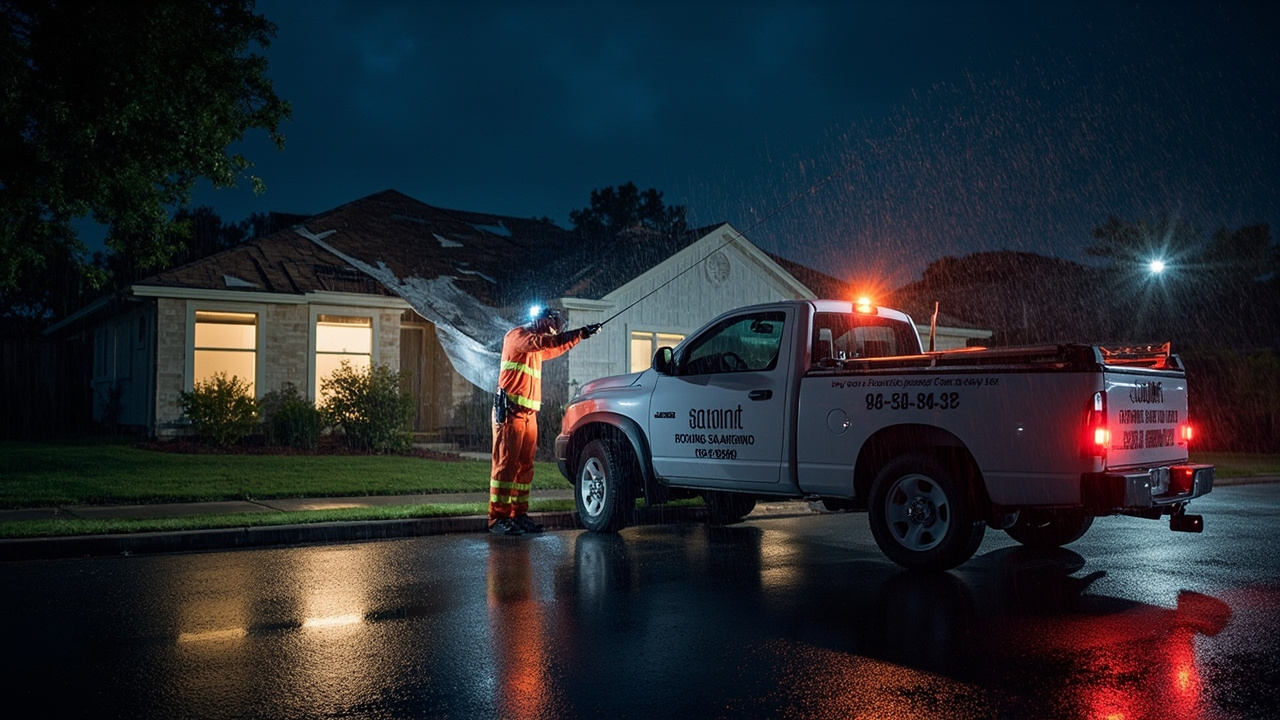
You heard the crack during the thunderstorm. Water is dripping through your ceiling. Your security system is alerting you to roof movement. Now it is 2 AM, and you need an emergency roofing contractor who answers the phone.

San Antonio's volatile weather patterns create roof emergencies without warning. Summer hail storms pummel asphalt shingles with golf ball sized ice. Sudden temperature swings from 90 degrees to freezing cause thermal shock in flashing and sealants. Hurricane season brings wind gusts that rip off ridge caps and peel back entire sections of membrane roofing on commercial buildings.

The Alamo City's clay soil compounds the problem. When heavy rain saturates expansive clay around your foundation, the ground shifts. This movement stresses roof structures, creating new penetration points where water enters. A small leak discovered at midnight becomes catastrophic water damage by morning if left unaddressed.

Traditional roofing companies operate on business hours. They return calls on Monday. They schedule estimates for next week. That delay costs you thousands in water damage to insulation, drywall, electronics, and inventory.

After hours roofer services exist because roof failures do not wait for convenient timing. When you search for urgent roof repair at 3 AM, you need a contractor with trucks loaded, crew members on call, and the authority to mobilize immediately. Every minute of water intrusion increases restoration costs and extends your exposure to structural compromise.

Summit Roofing San Antonio maintains dedicated 24/7 roof repair teams because we understand the true cost of waiting. Our emergency roofing services stop the damage while other companies are still asleep.

Why San Antonio Roofs Fail After Dark
How Emergency Roof Response Actually Works

How Emergency Roof Response Actually Works

Real emergency roofing services require infrastructure most companies do not maintain. We staff rotating on-call crews every night. When your call comes in, a licensed roofer answers, not an answering service. That roofer has access to your property details, material specifications, and insurance protocols before the truck leaves our facility.

Our emergency response vehicles carry tarping systems rated for 120 mph winds, temporary flashing materials, hydraulic sealants for active leaks, moisture detection equipment, and industrial lighting systems. We do not show up with a blue tarp and hope. We arrive prepared to execute temporary weatherproofing that will hold through the next storm cycle while we coordinate permanent repairs.

The first priority is stopping water intrusion. Our technicians identify the failure point, whether it is compromised flashing around a chimney, wind-lifted shingles exposing underlayment, or punctured TPO membrane on a flat commercial roof. We document the damage with thermal imaging and moisture meters to map the full extent of water penetration. This data becomes critical for insurance claims.

Temporary repairs use professional grade materials. We install reinforced tarping systems with battens and anchor points that integrate with your existing roof structure. For flat roofs, we apply quick-cure elastomeric coatings or mechanically fasten patch materials that bond to wet surfaces. These are not cosmetic fixes. These are engineered solutions designed to maintain building envelope integrity until permanent restoration begins.

Once the emergency is stabilized, we photograph all damage, provide detailed written assessments, and coordinate directly with your insurance adjuster. Our estimates separate emergency mitigation costs from permanent repair scope, giving you clear documentation for claims processing.

Emergency response is a discipline. It requires different equipment, different training, and different operational structure than standard roofing. That is why most companies do not offer it, and why the companies that claim to often fail to deliver.

What Happens When You Call for Emergency Roof Repair

24 Hour Roofer in San Antonio – Emergency Response Teams Dispatched in Under 60 Minutes
01

Immediate Damage Assessment

Within 60 minutes of your call, our emergency roofing contractor arrives with professional lighting and diagnostic equipment. We locate all penetration points, measure moisture infiltration using thermal cameras, and identify structural vulnerabilities. You receive a verbal briefing on damage severity and immediate risks while we prepare emergency containment. This assessment determines whether we are addressing isolated failure or system-wide compromise requiring comprehensive temporary protection.
02

Emergency Weatherproofing Deployment

Our crew installs industrial-grade containment systems engineered for your specific roof type. Pitched roofs receive reinforced tarping with mechanical fastening and sealed perimeters. Flat commercial roofs get temporary membrane patches or liquid-applied sealants rated for ponding water. We address all identified vulnerabilities in a single response, not just the obvious leak. Every penetration point is sealed, every compromised flashing is reinforced, and every structural concern is temporarily stabilized before we leave your property.
03

Documentation and Repair Coordination

Before our emergency team departs, you receive comprehensive photo documentation, written damage assessment, and a preliminary repair estimate. We provide insurance claim support paperwork and coordinate directly with your adjuster if requested. Our team schedules your permanent repair appointment and explains what to monitor while temporary protection is in place. You also receive direct contact information for our emergency supervisor, ensuring continuity if conditions change or additional concerns develop before permanent restoration begins.

Why Local Emergency Response Matters in San Antonio

National roofing chains advertise emergency services, then dispatch subcontractors who arrive four hours later with inadequate equipment. They do not understand San Antonio building codes. They do not stock materials compatible with our climate. They do not have relationships with local adjusters who handle claims in Bexar County.

Summit Roofing San Antonio operates from San Antonio. Our emergency crews know which neighborhoods flooded during the last storm. We understand how Historic District properties require different waterproofing approaches than new construction in Stone Oak. We stock flashing materials that match the architectural styles common in Alamo Heights and Terrell Hills.

Our technicians recognize the signs of foundation settlement causing roof stress, a problem specific to our expansive clay soil conditions. When we assess storm damage, we check for stress fractures in decking and truss movement that indicates soil shift beneath the structure. Out of town contractors miss these warnings because they do not understand our geological context.

We maintain direct relationships with San Antonio building inspectors and code officials. When emergency repairs require permits for structural work, we expedite approvals through established channels. We know which materials meet current energy code requirements and which installation methods satisfy local wind load specifications updated after recent hurricane seasons.

Our supply relationships with local distributors mean we access emergency materials at 3 AM when national chains are waiting for warehouse shipments. We get the exact color match for your existing shingles, the correct gauge metal for your commercial panels, and the proper membrane adhesive for your flat roof system without delay.

Response time determines damage scope. A San Antonio based emergency roofing contractor reaches your property in under an hour. A company dispatching from Austin or Houston loses two to three hours in travel. That difference represents thousands of dollars in preventable water damage.

Local expertise is not marketing language. It is operational capacity that directly impacts your outcome when minutes matter.

What Emergency Roof Service Actually Delivers

Response Time and Availability

Our emergency dispatch operates 24 hours a day, 365 days per year. A licensed roofer answers your call, not a call center. We commit to on-site arrival within 60 minutes for San Antonio properties, with faster response for active water intrusion emergencies. Our trucks remain loaded with emergency equipment and materials. We do not need to return to the shop before responding. Holiday weekends, Christmas morning, New Year's Eve, we maintain full emergency crew rotations because roof failures do not respect your calendar. When you call for urgent roof repair, we are already moving.

Damage Assessment Process

Emergency assessment uses professional diagnostic equipment. We deploy thermal imaging cameras to map hidden moisture in insulation and decking. We use moisture meters to measure saturation levels in structural members. We inspect attic spaces to identify rafter damage and check for compromised ventilation systems. Our technicians document every finding with detailed photography and written descriptions. You receive a comprehensive damage report that identifies all affected areas, estimates water intrusion volume, and assesses structural integrity. This documentation meets insurance company standards and provides the technical detail adjusters need for claim approval.

Quality of Emergency Repairs

Temporary protection systems are engineered solutions, not cosmetic patches. Our tarping uses reinforced polyethylene with UV inhibitors, rated for six month exposure. We install mechanical fastening with battens that distribute stress across sound decking, not into compromised areas. Flat roof patches use cold-applied membrane materials that bond to wet surfaces and cure in freezing temperatures. Sealants are commercial grade polyurethanes rated for ponding water and thermal cycling. These temporary systems protect your property through multiple storm events while permanent repairs are coordinated. Many temporary installations outlast the timeframes required for insurance processing and material procurement.

Insurance and Claims Support

We provide documentation formatted for insurance submission. Our damage reports include photo evidence, moisture readings, material identification, and repair scope descriptions that meet adjuster requirements. We separate emergency mitigation costs from permanent repair estimates, giving you clear cost breakdowns for claims processing. Our team communicates directly with insurance adjusters when requested, providing technical clarification and supporting documentation. We understand supplemental claim procedures when hidden damage is discovered during permanent repairs. You receive copies of all documentation for your records, ensuring you maintain complete claim history regardless of how your insurance company processes paperwork.

Frequently Asked Questions

You Have Questions,
We Have Answers

Can a roof be replaced in one day? +

Yes, most residential roofs in San Antonio can be replaced in one day. A standard asphalt shingle roof on a typical single-story home takes 8 to 12 hours with a full crew. Complex jobs with steep pitches, multiple valleys, or storm damage may extend into a second day. Weather matters. San Antonio's afternoon thunderstorms during summer can halt work. A reputable contractor schedules tearoff, deck inspection, underlayment, and shingle installation in sequence to protect your home. Emergency tarping happens immediately if weather threatens mid-job. Speed matters, but quality comes first when protecting your investment.

How much is an emergency roof repair? +

Emergency roof repairs in San Antonio range widely based on damage severity. Tarping and minor leak patches run lower, while structural fixes after storm damage cost significantly more. You pay for immediate response, materials, and labor. Insurance often covers storm-related emergencies after your deductible. The key is stopping water intrusion fast. San Antonio's heavy rains turn small leaks into ceiling collapses within hours. Reputable contractors provide transparent estimates before starting work. Avoid anyone demanding full payment upfront. Document damage with photos for your insurance claim before repairs begin.

Do roofers ever work at night? +

Yes, emergency roofers work at night when San Antonio storms cause severe damage. Tarping and temporary waterproofing happen 24/7 to stop active leaks. Full roof replacements rarely occur at night due to safety risks and city noise ordinances. You cannot inspect work quality in darkness. Most contractors start tearoff at dawn to maximize daylight hours. Emergency night calls focus on damage control, not permanent fixes. If someone offers to replace your entire roof at 2 a.m., walk away. Legitimate contractors tarp immediately, then return at sunrise for proper repairs.

How much do roofers charge per hour? +

Most San Antonio roofers do not charge hourly rates for standard projects. They bid per square (100 square feet) or provide flat project quotes. Emergency service calls may include trip fees plus hourly diagnostics. Labor accounts for 40 to 60 percent of total roof costs. Complexity matters more than time. A steep pitch or multiple penetrations increases labor regardless of hours worked. Hourly billing leaves costs unpredictable. Reputable contractors provide fixed quotes after inspection. If someone quotes hourly without a cap, expect surprise bills. Always get written estimates before work begins.

How much does it cost to replace a 2000 sq ft roof? +

Replacing a 2,000 square foot roof in San Antonio involves multiple cost factors. Material choice drives price. Asphalt shingles differ significantly from metal or tile. Roof pitch, complexity, and number of layers being removed affect labor. Decking repairs add costs if water damage exists underneath. San Antonio's hail-prone climate often reveals hidden damage during tearoff. Permits and disposal fees apply. Insurance may cover storm damage after your deductible. Get three written quotes from licensed contractors. Avoid lowball bids that skip deck inspection or use substandard materials. Quality installation protects your investment.

How quickly can you get a roof replaced? +

Emergency tarping happens within hours in San Antonio. Full roof replacement typically takes one to three days depending on size, complexity, and weather. Simple asphalt shingle roofs on single-story homes finish fastest. Tile or metal roofs require more time. Storm damage backlogs during San Antonio's hail season extend timelines to weeks. Reputable contractors provide realistic schedules upfront. Material availability matters. Custom colors or specialty products may delay start dates. Permitting adds days in some San Antonio neighborhoods. Beware of contractors who promise immediate starts during peak storm season. Quality work requires proper scheduling and preparation.

Is it cheaper to repair or replace a roof? +

Repair costs less upfront, but replacement saves money long-term if your roof nears end-of-life. A roof older than 15 years with widespread damage needs replacement. Patching fails when surrounding shingles are brittle from San Antonio's intense UV exposure. Multiple leak points signal systemic failure. Cosmetic hail damage across the entire roof requires replacement for insurance claims. Isolated storm damage on a newer roof warrants repair. A qualified inspector assesses remaining lifespan before recommending action. Repeated repairs on aging roofs waste money. One quality replacement beats endless patches on a failing system.

Will homeowners insurance cover a roof repair? +

Homeowners insurance covers roof repairs caused by sudden events like storms, hail, wind, or falling trees. You pay your deductible first. Wear and tear, poor maintenance, or age-related deterioration are excluded. San Antonio's hail storms trigger most claims. Document damage immediately with photos and timestamps. File claims within policy deadlines. Insurers send adjusters to verify storm damage versus pre-existing wear. Roofing contractors who offer to waive deductibles violate insurance fraud laws. Get independent inspections if your claim is denied. Wind and hail coverage varies by policy, so review your terms carefully.

What to do if your roof gets ripped off? +

If wind rips off your roof, call emergency roofers immediately for tarping. Do not wait until morning. San Antonio's sudden storms cause rapid interior damage. Move valuables away from affected areas and place buckets under active leaks. Document everything with photos for insurance. Do not attempt DIY tarping on steep pitches. Call your insurance company within 24 hours to start your claim. Avoid door-knockers offering instant repairs after storms. Verify contractor licenses before signing anything. Emergency tarping should happen within hours. Permanent repairs follow after insurance adjusters inspect and approve your claim.

How to tell if a roofer is lying? +

A lying roofer avoids written estimates, demands full payment upfront, or lacks verifiable local references. Check Texas contractor licenses through state databases. Scammers claim your insurance will cover everything without seeing your policy. They pressure immediate decisions after storms. Legitimate contractors explain findings, show you damage, and document with photos. Beware of mismatched shingle lots or missing drip edge during inspection. A good roofer identifies deck rot, explains flashing details, and provides material specs in writing. Trust contractors who pull permits and carry liability insurance. If it feels rushed or vague, walk away.

How San Antonio's Storm Patterns Create After Hours Roofing Emergencies

San Antonio experiences severe thunderstorms between midnight and 6 AM more frequently than most Texas cities. Our geographic position between the Gulf moisture corridor and the Hill Country creates nocturnal storm development. Summer supercells form over the Edwards Plateau after sunset, then track southeast through Bexar County during early morning hours. These storms produce straight-line winds exceeding 70 mph, hail larger than two inches, and torrential rainfall rates over four inches per hour. Most San Antonio roof emergencies occur while you sleep because that is when our most destructive weather arrives. Having access to a 24 hour roofer is not convenience, it is necessity driven by our regional meteorology.

Summit Roofing San Antonio has served this community through every major storm event of the past decade. Our crews responded to hundreds of emergency calls after the 2017 hailstorms that damaged roofs across Stone Oak and the Northwest Side. We deployed teams throughout the 2021 freeze that caused ice damming and thermal shock failures. Local experience means we understand how San Antonio weather damages roofs, which materials fail first, and what temporary protection methods work in our specific climate. When you need emergency roofing services from a contractor who has seen every failure mode our weather creates, you need a company that has been responding to San Antonio emergencies for years, not months.
Roofing Services in The San Antonio Area

Explore our service coverage in and around San Antonio using the map below. Summit proudly serves residential and commercial clients throughout the region. Whether you're in the heart of the city or in the nearby suburbs, we’re just a call away. We make it easy to reach us for inspections, quotes, or emergency assistance. Your trusted roofing team is always nearby.

Address:
Summit Roofing San Antonio, 1100 NW Loop 410, Suite 700, San Antonio, TX, 78213

Additional Services We Offer

Our news updates

Latest Articles & News from The Blogs

Managing Leaf Buildup in the Hard to Reach Roof Valleys of Shady Oaks Roof valleys channel rainwater off your home…

Managing Leaf Buildup in the Hard to Reach Roof Valleys of Shady Oaks

Managing Leaf Buildup in the Hard to Reach Roof Valleys of Shady Oaks Roof valleys channel rainwater off your home…

Understanding how Texas wildfire risks should influence your choice of roofing materials

Understanding how Texas wildfire risks should influence your choice of roofing materials Living in San Antonio means dealing with intense…

Choosing the Right Roof Underlayment to Battle South Texas Humidity

Choosing the Right Roof Underlayment to Battle South Texas Humidity Your roof faces a daily assault in San Antonio. The…

Contact Us

Your roof is failing. Water is entering your building. Every minute increases damage costs. Call Summit Roofing San Antonio at (726) 256-6199 immediately. Our emergency crew is standing by. We answer 24/7, dispatch within minutes, and arrive within an hour. Stop the damage now.