
Why removing an old satellite dish can leave your roof vulnerable to leaks
Removing an old satellite dish sounds simple. You unscrew a few bolts and pull it off the roof. But in San Antonio’s climate, that quick fix often creates a bigger problem. The mounting hardware penetrates the roof’s protective layers. When the dish comes down, those holes remain. Without proper sealing, water finds its way in. How to get your San Antonio roof fixed after a major hail storm.
San Antonio’s intense summer heat and sudden storms make this issue worse. The hot Texas sun dries out any old sealant. When heavy rain hits, water seeps through the compromised areas. By the time you notice water spots on your ceiling, the damage has already started. Texas Department of Licensing and Regulation.
Many homeowners in neighborhoods like Alamo Heights and Terrell Hills discover this problem after removing unused dishes from previous tenants or owners. The mounting points were never properly sealed when installed. Now, removing the dish exposes those weak points.
Why Satellite Dishes Leak (The San Antonio Heat Factor)
San Antonio’s climate creates unique challenges for satellite dish mounts. Summer temperatures regularly exceed 100 degrees. This extreme heat causes several problems with roof penetrations. What to do when your San Antonio roof starts leaking in the middle of a storm.
First, the sealant used around mounting bolts dries out and cracks. What started as a flexible barrier becomes brittle. Once cracked, it can’t expand and contract with temperature changes. This leads to gaps that water exploits.
Second, the metal mounting hardware itself expands and contracts. On a 100-degree day, a lag bolt can grow significantly. When temperatures drop at night, it contracts. This constant movement loosens the seal over time.
Third, San Antonio’s high UV index accelerates sealant degradation. The sun’s rays break down the chemical bonds in silicone and other sealants. What should last 10-15 years might fail in 3-5 years in our climate.
Homeowners in Stone Oak and surrounding areas often notice this problem after a heavy rain. Water travels along rafters and appears far from the actual leak source. Finding the true entry point requires professional inspection.
Signs Your Roof Leak is Caused by Your Satellite Mount
Identifying the source of a roof leak can be tricky. Water travels along rafters and appears in unexpected places. Here are specific signs that point to your satellite dish mount as the culprit.
Interior signs include water spots on your ceiling directly below where the dish was mounted. If you see stains near the dish location, that’s a strong indicator. Also watch for bubbling paint or soft drywall around light fixtures in that area.
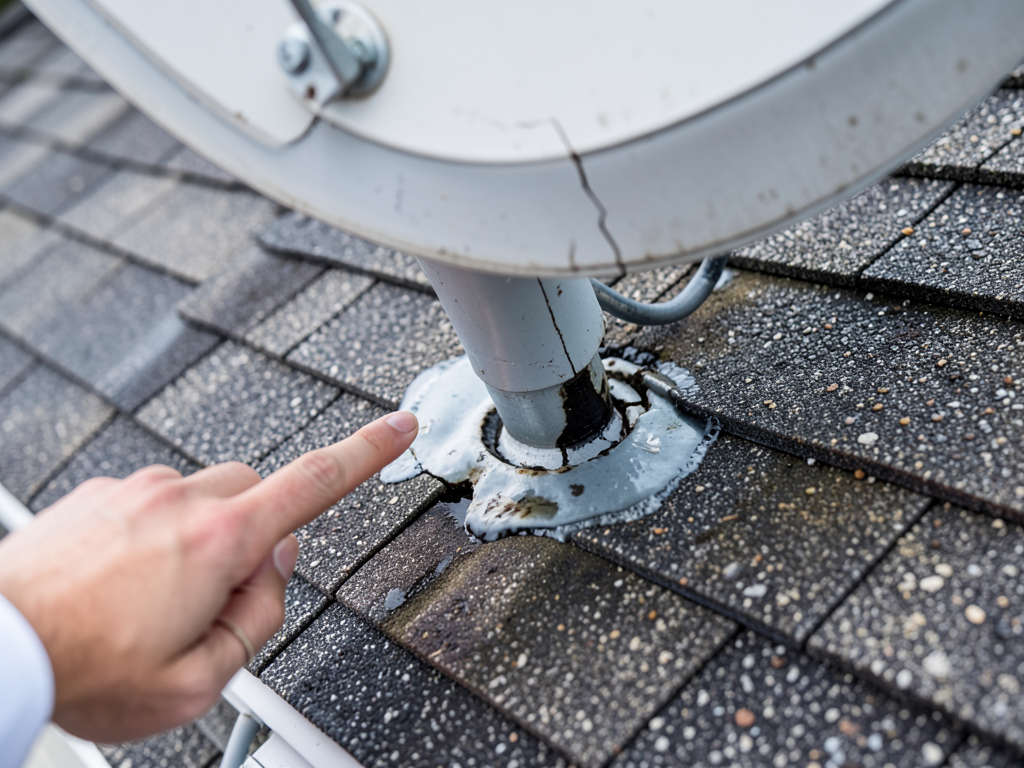
Exterior signs are often more telling. Look for missing or cracked sealant around the mounting feet. Check if shingles around the mount appear curled or damaged. In San Antonio’s heat, asphalt shingles near mounting points often show accelerated aging.
Another sign is the age of your satellite service. If you had DirecTV or Dish Network installed 5+ years ago and never properly sealed the mounts, the sealant has likely failed. The same applies to newer Starlink mounts, which use different hardware but still require proper sealing.
Homeowners in Universal City and Converse often report these symptoms after removing old dishes when upgrading to streaming services. The timing isn’t coincidence. The removal process often disturbs already-compromised seals. How to Get Your Commercial Flat Roof Ready for San Antonio Summer Storms.
The Wrong Way vs. The Right Way to Seal a Mount
Many satellite installers use quick-fix methods that fail in San Antonio’s climate. Understanding the difference between temporary fixes and proper sealing helps you make informed decisions. Understanding Roof Warranties.
The wrong way involves simply applying silicone caulk around the mounting feet. This might work for a few months, but San Antonio’s heat causes it to fail quickly. The caulk can’t handle the thermal movement of the hardware or the intense UV exposure.
Another common mistake is using roofing tar. While it seems durable, tar becomes brittle in our heat. It cracks and separates from the mounting hardware, creating new entry points for water.
The right way involves proper flashing and sealing techniques. For asphalt shingle roofs common in San Antonio, this means using specialized mounting kits with rubber gaskets. These compress around the lag bolts, creating a watertight seal that moves with the hardware.
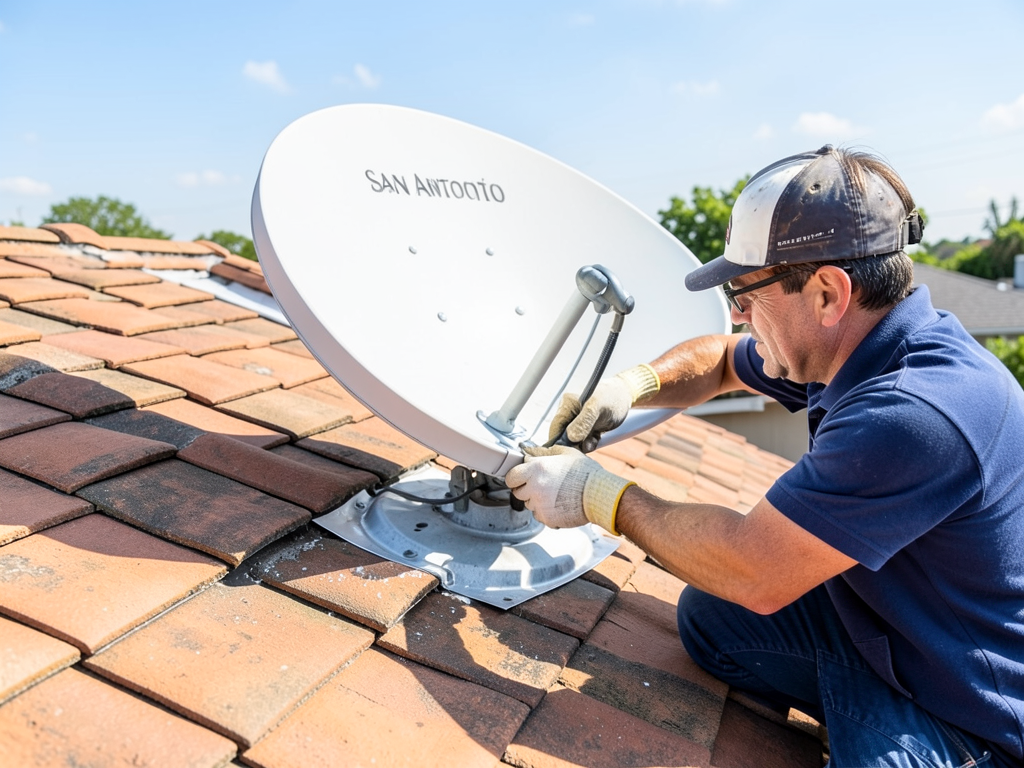
For tile roofs found in some Alamo Heights homes, the approach differs. Proper tile mounting requires cutting precise holes and using manufacturer-approved flashing kits. These integrate with the tile pattern, maintaining the roof’s waterproof integrity.
Professional roofers also use pitch pans around multiple penetrations. These create a contained area filled with mastic that can handle movement without failing. This method proves especially effective for complex mounting setups with multiple cables.
DIY Temporary Fixes vs. When to Call a San Antonio Pro
Some satellite dish leaks can be temporarily addressed with DIY methods. However, knowing when to call a professional can save you from costly water damage repairs.
Safe DIY steps include inspecting the mount from the ground with binoculars. Look for obvious sealant failure or missing hardware. You can also check your attic during daylight for light coming through roof penetrations.
For small, accessible leaks, applying roofing cement as a temporary patch might help. This buys time but isn’t a permanent solution. The same applies to reapplying silicone caulk around mounting feet.
However, several situations require professional help. If you notice water damage inside your home, don’t wait. Water spreads quickly and causes structural damage. Also call a pro if you’re unsure about safely accessing your roof.
Professional roofers have the tools and materials to properly seal mounts. They can also inspect surrounding shingles for damage caused by the mounting hardware. In San Antonio’s climate, this comprehensive approach prevents future leaks.
Another consideration is warranty protection. DIY repairs might void your roof warranty. Professional repairs maintain your warranty coverage while properly addressing the leak source.
Removing Old Dishes: Preventing Future Leaks
Removing an old satellite dish requires more than unscrewing bolts. Proper removal prevents creating new leak points while addressing existing ones.
The first step involves documenting the installation. Take photos of how the dish mounts to the roof. This helps identify all penetration points that need sealing. Note any existing damage around mounting areas.
Next, carefully remove the mounting hardware. Keep all screws, bolts, and brackets organized. You’ll need to assess whether to reuse or replace each component during reinstallation.
After removal, thoroughly clean the mounting area. Remove all old sealant, rust, and debris. This ensures new sealant adheres properly. For asphalt shingles, check if any need replacement due to damage from the mounting hardware.
The sealing process depends on whether you’re reinstalling a dish or permanently removing it. For reinstallation, use new mounting hardware with rubber gaskets. Apply fresh, UV-resistant sealant designed for San Antonio’s climate.
For permanent removal, fill all holes with roofing cement and cover with matching shingles. Consider installing a small piece of flashing over the area for added protection. This prevents future leaks even if you forget exactly where the old mount was.
Homeowners in areas like Terrell Hills and Olmos Park should consider professional removal. These neighborhoods often have historic or high-value homes where proper repair techniques matter most.
San Antonio Weather Considerations for Roof Penetrations
San Antonio’s weather patterns create specific challenges for satellite dish mounts and other roof penetrations. Understanding these factors helps you make better repair decisions.
Our summer heat isn’t just uncomfortable for people. It’s brutal on roofing materials. Temperatures on dark shingles can exceed 150 degrees. This extreme heat accelerates sealant failure and causes expansion-contraction cycles that stress roof penetrations.
Spring and fall bring severe thunderstorms with high winds and heavy rain. These storms test every seal on your roof. Weak points around satellite mounts often fail first, allowing water intrusion during critical times.
Hail is another San Antonio reality. While satellite dishes themselves are impact-resistant, the mounting hardware and surrounding shingles aren’t. Hail damage can create new leak points or worsen existing ones around mounts.
Winter brings another challenge. Though we rarely see snow, we get freeze-thaw cycles. Water that enters small gaps around mounts can freeze and expand, widening those gaps. This cycle repeats throughout winter, progressively worsening leaks.
San Antonio’s humidity also plays a role. High humidity slows sealant curing and can affect the adhesion of repair materials. Professional roofers in our area adjust their techniques based on current humidity levels.
These weather factors explain why satellite dish leaks are so common in San Antonio. What works in other climates often fails here. That’s why local expertise matters when repairing these issues.
Cost Factors for Satellite Mount Leak Repairs
Repair costs for satellite dish-related leaks vary based on several factors. Understanding these helps you budget appropriately and avoid surprises. How much a new roof actually costs in San Antonio right now.
The extent of damage is the biggest cost factor. A simple sealant replacement around accessible mounts might cost $150-300. However, if water has damaged decking or caused interior damage, costs can exceed $1,000.
Roof type affects repair complexity and cost. Asphalt shingle repairs are typically least expensive. Tile roof repairs require more specialized skills and cost more. Metal roof repairs fall in the middle range.
Mount accessibility impacts labor costs. Steep roofs or complex mounting configurations require more time and safety equipment. Multiple mount repairs cost more than single-mount fixes.
Material quality affects both cost and longevity. Premium sealants and flashing materials cost more upfront but last longer in San Antonio’s climate. This often proves more economical long-term.
Emergency repairs cost more than scheduled ones. If you’re dealing with active leaks during a storm, expect premium pricing for immediate service.
Insurance coverage may apply if the leak caused interior damage. However, neglect-related damage often isn’t covered. Professional documentation of the repair can help with insurance claims.
For comparison, here’s a breakdown of typical repair scenarios:
| Repair Type | Typical Cost Range | Time Required | Best For |
|---|---|---|---|
| Sealant Replacement | $150 – $300 | 1-2 hours | Minor leaks, accessible mounts |
| Flashing Installation | $300 – $600 | 2-4 hours | Multiple mounts, older installations |
| Shingle Replacement | $400 – $800 | 3-5 hours | Damaged surrounding shingles |
| Structural Repair | $800 – $2,500+ | 1-2 days | Water damage, decking replacement |
These are current 2026 estimates for the San Antonio area. Prices vary based on specific circumstances and contractor rates.
Preventing Satellite Dish Leaks During Installation
If you’re installing a new satellite dish or moving an existing one, proper installation prevents future leaks. Here’s what to look for and request from your installer.
First, ensure the installer uses manufacturer-approved mounting hardware. Generic brackets might be cheaper but often lack proper sealing features. Look for mounts with integrated rubber gaskets or compression seals.
Second, verify they’re using UV-resistant sealants specifically rated for roof penetrations. Standard silicone caulk isn’t sufficient for San Antonio’s climate. Ask about the sealant’s temperature rating and UV resistance.
Third, proper flashing is essential. Even for small dishes, flashing around the mounting feet provides an extra layer of protection. This is especially important for tile and metal roofs common in some San Antonio neighborhoods.
Fourth, ensure all cable penetrations are properly sealed. The dish mount isn’t the only potential leak point. Cable entry holes need the same attention as mounting hardware.
Fifth, ask about the installer’s warranty on their work. A one-year warranty on installation workmanship is standard. This protects you if leaks develop from installation errors.
Sixth, consider the dish’s future. If you might upgrade services soon, discuss mounting options that make future removal easier. Some mounts allow removal without leaving permanent roof penetrations.
Finally, document the installation with photos. This helps if leaks develop later and you need to determine if they’re related to the dish installation or existing roof issues.
Homeowners in new developments around San Antonio should be particularly vigilant. These homes often have roofs at their most vulnerable during the first few years after construction.
Finding Reliable Satellite Dish Leak Repair in San Antonio
Not all roofing contractors have experience with satellite dish leak repairs. Finding the right professional ensures the job gets done correctly the first time.
Look for contractors with specific experience in leak detection and repair. General roofing experience isn’t enough. You need someone who understands how satellite mounts create unique leak patterns.
Check for proper licensing and insurance. In Texas, roofing contractors need a license through the Texas Department of Licensing and Regulation. Verify this before hiring anyone.
Ask about their experience with your specific roof type. Tile, metal, and asphalt shingle roofs each require different repair approaches. The contractor should confidently discuss your roof type’s specific needs.
Get multiple estimates, but don’t automatically choose the cheapest. Extremely low bids often indicate cut corners or inexperience with proper sealing techniques.
Read reviews specifically mentioning leak repairs or satellite dish issues. Generic positive reviews don’t tell you if they’re good at this specific type of repair.
Ask about their diagnostic process. A good contractor will explain how they’ll identify the leak source, not just patch visible problems. They should discuss using moisture meters or infrared cameras if needed.
Finally, ensure they provide written warranties on their work. This protects you if the repair fails prematurely. Understand what’s covered and for how long.
Summit Roofing San Antonio specializes in these types of repairs. Our technicians understand San Antonio’s unique climate challenges and use proven methods to fix satellite dish leaks permanently.
Frequently Asked Questions
Can I just seal the holes with caulk after removing my satellite dish?
Simply applying caulk isn’t sufficient for San Antonio’s climate. The heat causes caulk to dry out and crack within months. Proper repair requires filling holes with roofing cement, installing flashing if needed, and ensuring surrounding shingles are intact. For a permanent fix, professional repair is recommended.
How long does a satellite dish leak repair take?
Simple sealant replacements take 1-2 hours. More complex repairs involving flashing installation or shingle replacement take 2-4 hours. If structural damage is found, repairs might take 1-2 days. Most repairs can be completed in a single visit unless extensive damage is discovered.
Will my homeowner’s insurance cover satellite dish leak repairs?
Insurance typically covers sudden, accidental damage but not neglect-related issues. If the leak caused interior damage, that portion might be covered. However, repairing the roof penetration itself is usually considered maintenance. Check your specific policy or ask your agent about coverage details.
How can I tell if a leak is from my satellite dish or somewhere else?
Leaks from satellite mounts often show specific patterns. Water spots directly below the mount location are a strong indicator. Also look for damaged or missing sealant around the mounting feet. However, water can travel along rafters, so professional inspection might be needed to confirm the source.
Should I remove old satellite dishes even if they’re not causing leaks?
Removing unused dishes is generally recommended. Even if they’re not leaking now, the seals will eventually fail in San Antonio’s climate. Removal also improves your home’s appearance and eliminates the risk of the dish becoming a projectile during high winds. If you might reinstall service, consider using removable mounts that don’t penetrate the roof.
Protect Your San Antonio Home from Satellite Dish Leaks
Satellite dish leaks are common in San Antonio, but they’re also preventable and fixable. The key is understanding how our unique climate affects roof penetrations and using proper repair techniques.
Whether you’re dealing with an active leak or planning to remove old dishes, don’t wait until water damage becomes severe. Small leaks quickly become big problems in our climate.
Summit Roofing San Antonio has the local expertise to diagnose and repair satellite dish leaks correctly the first time. Our technicians understand the specific challenges of San Antonio’s heat, storms, and humidity.
Don’t let a simple dish removal turn into a costly roof repair. Call Summit Roofing San Antonio today at (726) 256-6199 for professional inspection and repair. We’ll ensure your roof stays watertight, protecting your home from San Antonio’s harsh weather.
Visit our website at https://summitroofingsanantonio.com to learn more about our leak detection and repair services. Your roof’s integrity is too important to leave to chance. For more information, visit FEMA roof damage guidelines.
{
“@context”: “https://schema.org”,
“@type”: “BlogPosting”,
“headline”: “Why removing an old satellite dish can leave your roof vulnerable to leaks”,
“description”: “Learn why satellite dish removal in San Antonio often causes roof leaks and how to fix them properly. Expert roofing advice from Summit Roofing San Antonio.”,
“wordCount”: 2713,
“datePublished”: “2026-05-08T10:15:00.000Z”,
“dateModified”: “2026-05-08T10:15:00.000Z”,
“inLanguage”: “en-US”,
“mainEntityOfPage”: {
“@type”: “WebPage”,
“@id”: “https://summitroofingsanantonio.com”
},
“publisher”: {
“@type”: “LocalBusiness”,
“name”: “Summit Roofing San Antonio”,
“url”: “https://summitroofingsanantonio.com”
},
“author”: {
“@type”: “Organization”,
“name”: “Summit Roofing San Antonio”,
“url”: “https://summitroofingsanantonio.com”
},
“image”: {
“@type”: “ImageObject”,
“url”: “https://summitroofingsanantonio.com/wp-content/uploads/2026/03/why-removing-an-old-satellite-dish-can-leave-your-1.png”
}
}
{
“@context”: “https://schema.org”,
“@type”: “RoofingContractor”,
“name”: “Summit Roofing San Antonio”,
“url”: “https://summitroofingsanantonio.com”,
“address”: {
“@type”: “PostalAddress”,
“addressLocality”: “San Antonio”
},
“areaServed”: {
“@type”: “City”,
“name”: “San Antonio”
}
}
{
“@context”: “https://schema.org”,
“@type”: “FAQPage”,
“mainEntity”: [
{
“@type”: “Question”,
“name”: “Can I just seal the holes with caulk after removing my satellite dish?”,
“acceptedAnswer”: {
“@type”: “Answer”,
“text”: “Simply applying caulk isn’t sufficient for San Antonio’s climate. The heat causes caulk to dry out and crack within months. Proper repair requires filling holes with roofing cement, installing flashing if needed, and ensuring surrounding shingles are intact. For a permanent fix, professional repair is recommended.”
}
},
{
“@type”: “Question”,
“name”: “How long does a satellite dish leak repair take?”,
“acceptedAnswer”: {
“@type”: “Answer”,
“text”: “Simple sealant replacements take 1-2 hours. More complex repairs involving flashing installation or shingle replacement take 2-4 hours. If structural damage is found, repairs might take 1-2 days. Most repairs can be completed in a single visit unless extensive damage is discovered.”
}
},
{
“@type”: “Question”,
“name”: “Will my homeowner’s insurance cover satellite dish leak repairs?”,
“acceptedAnswer”: {
“@type”: “Answer”,
“text”: “Insurance typically covers sudden, accidental damage but not neglect-related issues. If the leak caused interior damage, that portion might be covered. However, repairing the roof penetration itself is usually considered maintenance. Check your specific policy or ask your agent about coverage details.”
}
},
{
“@type”: “Question”,
“name”: “How can I tell if a leak is from my satellite dish or somewhere else?”,
“acceptedAnswer”: {
“@type”: “Answer”,
“text”: “Leaks from satellite mounts often show specific patterns. Water spots directly below the mount location are a strong indicator. Also look for damaged or missing sealant around the mounting feet. However, water can travel along rafters, so professional inspection might be needed to confirm the source.”
}
},
{
“@type”: “Question”,
“name”: “Should I remove old satellite dishes even if they’re not causing leaks?”,
“acceptedAnswer”: {
“@type”: “Answer”,
“text”: “Removing unused dishes is generally recommended. Even if they’re not leaking now, the seals will eventually fail in San Antonio’s climate. Removal also improves your home’s appearance and eliminates the risk of the dish becoming a projectile during high winds. If you might reinstall service, consider using removable mounts that don’t penetrate the roof.”
}
}
]
}
{
“@context”: “https://schema.org”,
“@type”: “BreadcrumbList”,
“itemListElement”: [
{
“@type”: “ListItem”,
“position”: 1,
“name”: “Home”,
“item”: “https://summitroofingsanantonio.com”
},
{
“@type”: “ListItem”,
“position”: 2,
“name”: “Blog”,
“item”: “https://summitroofingsanantonio.com/blog”
},
{
“@type”: “ListItem”,
“position”: 3,
“name”: “Why removing an old satellite dish can leave your roof vulnerable to leaks”
}
]
}
{
“@context”: “https://schema.org”,
“@type”: “Service”,
“serviceType”: “Roofing”,
“provider”: {
“@type”: “LocalBusiness”,
“name”: “Summit Roofing San Antonio”,
“url”: “https://summitroofingsanantonio.com”
},
“areaServed”: {
“@type”: “City”,
“name”: “San Antonio”
},
“description”: “Learn why satellite dish removal in San Antonio often causes roof leaks and how to fix them properly. Expert roofing advice from Summit Roofing San Antonio.”
}