
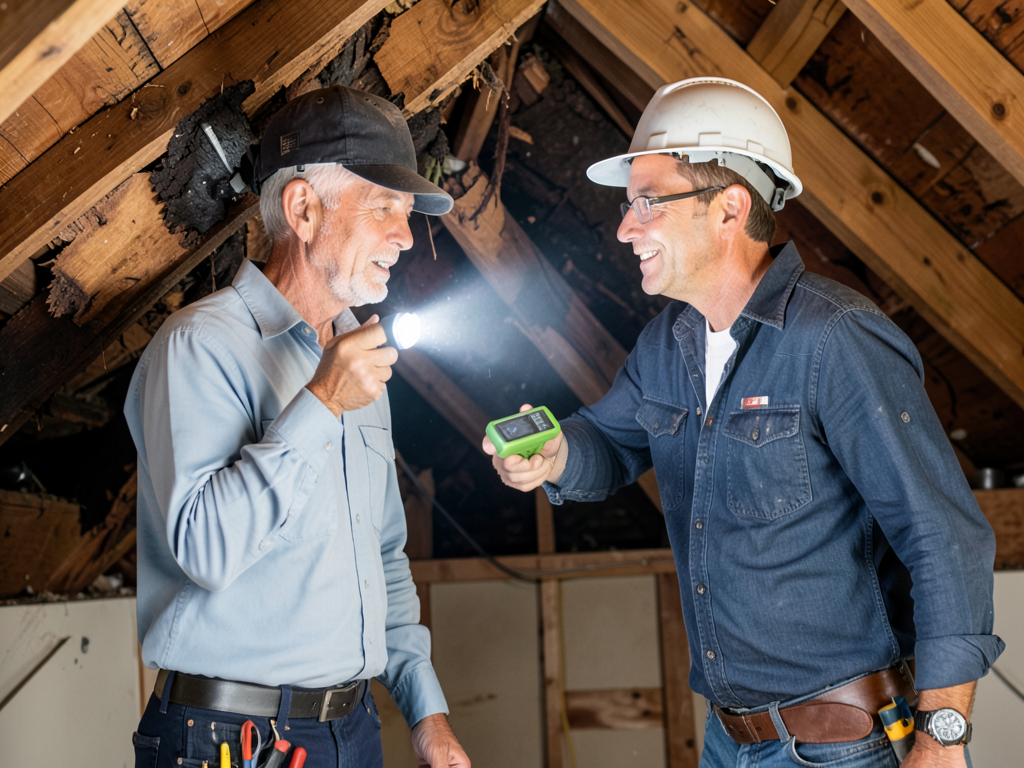
The Mission District in San Antonio faces a hidden threat that could be destroying your roof right now. High humidity levels common to this area create perfect conditions for wood rot to develop inside your roof structure without any visible warning from the outside. How to get your San Antonio roof fixed after a major hail storm.
Many homeowners in neighborhoods near the San Antonio River walk outside and see a perfectly normal roof. The shingles look fine. No obvious damage. But inside the attic, moisture is slowly eating away at the wooden deck and support structures. What to do when your San Antonio roof starts leaking in the middle of a storm.
This article explains why Mission District humidity creates such a serious problem and what you can do to protect your home before costly damage occurs.
How Mission District humidity creates roof rot
San Antonio’s Mission District experiences higher humidity levels than many other parts of the city. The area sits in a low-lying zone near the river where moist air tends to settle and linger.
During summer months, daytime temperatures often reach the 90s while nighttime temperatures drop to the 70s. This temperature swing causes condensation to form inside your attic space. When warm, moist air from your living areas rises and meets the cooler attic surfaces, water droplets form on wood surfaces.
Over time, this constant moisture exposure creates ideal conditions for fungal growth. The fungi break down the cellulose in wood, causing it to soften and lose structural integrity. What starts as a small problem can quickly spread across your entire roof deck.. Read more about Dealing with moss and lichen growth on shaded roofs in the Alta Vista neighborhood.
Many homes in the Mission District were built before modern building codes required proper attic ventilation. These older structures trap moisture inside, accelerating the rot process. Even newer homes can develop problems if ventilation systems become blocked by insulation or debris.
Signs your roof deck might already be rotting
Roof deck rot often develops silently for months or years before showing obvious symptoms. By the time you notice problems from the ground, significant damage may already exist. How to Get Your Commercial Flat Roof Ready for San Antonio Summer Storms.
Inside your attic, look for these warning signs:
- Dark water stains on rafters or decking
- Soft or spongy wood when pressed with a screwdriver
- Fungal growth that appears as white, green, or black patches
- Musty odors that persist even after cleaning
- Peeling paint on ceiling joists near roof edges
Outside your home, watch for:
- Sagging roof sections that create wavy lines
- Cracked or curling shingles at roof edges
- Ice dam formation during rare freezing weather
- Excessive granule loss from asphalt shingles
The screwdriver test provides a simple way to check for rot. Press the tip of a screwdriver into wooden rafters or decking. Healthy wood resists penetration. Rotted wood allows the screwdriver to sink in easily with little resistance.
Another test involves checking for moisture content. Wood with moisture levels above 20% creates ideal conditions for rot fungi to thrive. A moisture meter costs around $30 and can help you monitor attic conditions. How much a new roof actually costs in San Antonio right now.
Mission District homes most at risk
Certain home characteristics make some Mission District properties more vulnerable to humidity-related roof rot.
Homes built before 1980 often lack proper vapor barriers and adequate ventilation. These structures were constructed when energy efficiency standards were less stringent. The original design allows moist air to become trapped in attic spaces.
Spanish Colonial and Mediterranean-style homes common in the area feature complex rooflines with multiple valleys and dormers. These architectural details create areas where moisture can collect and ventilation becomes difficult.
Properties near the San Antonio River or other water features experience consistently higher humidity levels. The moisture in the air settles in low-lying areas, creating microclimates that accelerate wood deterioration.
Homes with large, mature trees nearby face additional challenges. Tree canopies block sunlight from reaching roof surfaces, preventing natural drying. Falling leaves and debris trap moisture against roofing materials. Built-Up Roofing (BUR).
Multi-story homes in the Mission District present unique ventilation challenges. Hot air rises and becomes trapped in upper-level attic spaces where it cannot escape through standard ridge vents.
Common causes of attic moisture buildup
Several factors contribute to excessive moisture in Mission District attics:
Bathroom and kitchen exhaust fans that vent into the attic instead of outside. This practice dumps warm, moist air directly into the attic space where it condenses on cold surfaces.
Leaky ductwork that allows conditioned air to escape into unconditioned attic spaces. The temperature difference between inside and outside air creates condensation on duct surfaces.
Insufficient insulation that allows warm air from living spaces to rise into the attic. This warm air carries moisture that condenses when it contacts cooler surfaces.
Blocked soffit vents that prevent fresh air from entering the attic. Soffit vents work with ridge vents to create airflow that carries moisture out of the attic space.
Roof leaks that introduce water into attic spaces. Even small leaks can create persistent moisture problems that lead to widespread rot.
Plumbing leaks in walls or ceilings that allow water to seep into wooden structures. These hidden leaks create constant moisture exposure.
Preventing roof rot in humid climates
Proper attic ventilation forms the foundation of rot prevention. A well-designed ventilation system creates continuous airflow that carries moisture out of your attic before it can cause damage.
Passive ventilation systems work by creating a natural convection current. Cool air enters through soffit vents at the roof edges. As this air warms in the attic, it rises and exits through ridge vents at the roof peak. This constant airflow removes moisture-laden air before condensation can occur.
Active ventilation systems use powered fans to force air movement. These systems prove especially effective in Mission District homes where natural convection may be insufficient due to complex roof designs or limited airflow paths.
Proper insulation prevents warm, moist air from your living spaces from entering the attic. The insulation should create an effective thermal barrier while allowing ventilation air to flow freely above it.
Moisture barriers installed on the warm side of attic insulation prevent water vapor from reaching cold surfaces where it can condense. These barriers prove especially important in Mission District homes where humidity levels remain high throughout much of the year.
Regular roof inspections catch problems early before they develop into major structural issues. Professional inspections should occur annually, with additional checks after severe weather events.
Comparing roof deck materials for humid areas
The type of material used for your roof deck significantly impacts its resistance to humidity-related damage.
| Material | Moisture Resistance | Cost per Square Foot | Lifespan in High Humidity |
|---|---|---|---|
| CDX Plywood | Moderate | $1.50 – $2.00 | 15-20 years |
| OSB (Oriented Strand Board) | Low | $1.25 – $1.75 | 10-15 years |
| Advantech OSB | High | $2.50 – $3.50 | 25-30 years |
| Marine Grade Plywood | Very High | $4.00 – $6.00 | 30+ years |
Standard OSB absorbs moisture readily and swells when wet. This material works poorly in humid climates where moisture exposure is constant. Once OSB begins to deteriorate, the damage spreads quickly across the panel.
CDX plywood offers better moisture resistance than standard OSB. The cross-laminated layers provide more stability when exposed to humidity changes. However, CDX still deteriorates over time in persistently moist conditions.
Advantech OSB features enhanced moisture resistance through special resins and wax treatments. This material resists swelling and maintains structural integrity better than standard OSB in humid environments.
Marine grade plywood provides the highest moisture resistance. Special adhesives and treatments make this material virtually impervious to water damage. The high cost limits its use to specialized applications.
Hidden dangers of ignoring roof rot
Many Mission District homeowners underestimate the risks of untreated roof rot. The damage extends far beyond simple wood deterioration.
Structural integrity becomes compromised as rotted wood loses its load-bearing capacity. Roof decks can collapse under normal snow loads or during severe weather events. The weakened structure cannot support the weight of roofing materials or resist wind uplift forces.
Energy efficiency suffers dramatically when roof rot develops. Gaps and holes in the roof deck allow conditioned air to escape, forcing HVAC systems to work harder and increasing utility bills. The moisture problems also reduce insulation effectiveness.
Indoor air quality deteriorates as mold and mildew spores spread from the attic into living spaces. These spores trigger respiratory problems, allergic reactions, and other health issues. The musty odors permeate the entire home.
Property values decline significantly when roof rot goes untreated. Home inspectors routinely check for signs of moisture damage and wood rot. The presence of these problems can derail real estate transactions or force sellers to accept much lower offers.
Insurance companies may deny claims related to long-term moisture damage or wood rot. Most policies exclude damage resulting from lack of maintenance or gradual deterioration. The financial burden falls entirely on the homeowner.
Professional inspection vs. DIY diagnosis
Many homeowners attempt to diagnose roof problems themselves to save money. While basic inspections help identify obvious issues, professional assessments provide much more comprehensive evaluations.
DIY inspections typically involve visual checks from ground level and limited attic access. Homeowners might miss critical warning signs that only become visible with specialized equipment or from specific vantage points.. Read more about Why your Castle Hills home might need a ridge vent upgrade to survive the summer.
Professional inspectors use moisture meters to detect hidden water intrusion. They employ thermal imaging cameras to identify temperature differences that indicate moisture problems behind walls or under roofing materials.
Experienced roofers understand how local climate conditions affect different roofing systems. They recognize early warning signs specific to San Antonio’s humidity patterns and can recommend targeted solutions.
Professional inspections include detailed documentation with photographs and moisture readings. This documentation proves valuable for insurance claims or when selling your home.
The cost of professional inspection typically ranges from $150 to $400 depending on roof complexity and inspection thoroughness. This investment often prevents thousands of dollars in future repairs by catching problems early. EPA Mold Resources.
Most reputable roofing companies offer free basic inspections as part of their service estimates. These inspections provide enough information to determine if more comprehensive evaluation is needed.
Emergency steps for suspected roof rot
If you suspect roof rot in your Mission District home, take these immediate steps to prevent further damage:
- Minimize attic access to prevent additional moisture from entering the space
- Check for active leaks during rainfall and place containers to catch water
- Improve ventilation by ensuring all vents remain unobstructed
- Reduce indoor humidity by running dehumidifiers in affected areas
- Document all visible damage with photographs for insurance purposes
Avoid these common mistakes when dealing with suspected roof rot:
- Never attempt major repairs during wet or humid conditions
- Do not paint or seal over rotted wood without proper treatment
- Avoid walking on sagging roof sections that may collapse
- Never ignore musty odors or assume they will go away on their own
The longer you wait to address roof rot, the more extensive and expensive the repairs become. Wood that feels slightly soft today may become structurally compromised within months.
Emergency tarping provides temporary protection while waiting for professional repairs. Quality tarps secured properly can prevent additional water intrusion for several weeks.
Local building codes and requirements
San Antonio building codes address roof ventilation and moisture control through specific requirements that help prevent rot problems.
The International Residential Code adopted by San Antonio requires minimum ventilation rates based on attic floor area. Typically, one square foot of net free ventilation area is required for every 150 square feet of attic space.
Vents must be distributed properly to ensure effective airflow. At least 50% of required ventilation must be located in the upper portion of the roof, with the remaining 50% in the lower portion near the eaves.
Building permits are required for most roof replacements and major repairs in the Mission District. The permitting process ensures work meets current code requirements for ventilation, materials, and installation methods.
Insurance companies often require documentation of code compliance for coverage to remain valid. Work performed without permits may void insurance coverage for related damage.
Historic district regulations in parts of the Mission District may restrict certain ventilation improvements or material choices. Always check with local authorities before making exterior modifications to historic properties.
Long-term solutions for Mission District homes
Addressing roof rot requires a comprehensive approach that tackles both immediate damage and underlying moisture problems.
Complete roof deck replacement becomes necessary when rot affects more than 20% of the surface area. This process involves removing all roofing materials down to the rafters, replacing damaged decking, and installing new underlayment and shingles.
Upgrading to moisture-resistant materials during replacement provides long-term protection. Advantech OSB or marine-grade plywood resists humidity damage better than standard materials. Synthetic underlayment offers superior moisture protection compared to traditional felt paper.
Improving attic ventilation may require adding or enlarging existing vents. Ridge vents, turbine vents, or powered attic fans can dramatically improve airflow in problematic areas.
Installing proper vapor barriers prevents moisture from migrating into attic spaces. These barriers work best when installed during major renovations or roof replacements.
Regular maintenance prevents future problems. This includes cleaning gutters, removing debris from roof surfaces, and checking ventilation systems annually.
Monitoring attic humidity levels helps catch problems early. Hygrometers cost less than $20 and provide continuous readings of moisture conditions in your attic space.
Frequently Asked Questions
How can I tell if my roof deck is rotting without going into the attic?
Look for sagging roof sections, cracked or curling shingles at edges, and dark water stains on ceiling drywall. These exterior signs often indicate underlying rot problems.
Does homeowners insurance cover roof rot damage?
Most policies exclude damage from lack of maintenance or gradual deterioration. Coverage typically applies only to sudden damage from covered events like storms. Always check your specific policy details.
How long does it take for roof rot to become a serious problem?
Wood rot can progress from minor to severe in as little as 6-12 months in persistently humid conditions. Early detection and treatment prevent most serious damage.
Can I repair just the damaged sections of roof deck?
Spot repairs work for isolated damage affecting less than 10% of the deck. Widespread rot requires complete replacement to ensure structural integrity and prevent future problems.
What’s the difference between dry rot and wet rot?
Wet rot requires constant moisture exposure to survive. Dry rot can spread through wood with lower moisture content and often appears as cracking or cubing of wood fibers.
Take action before your roof fails
High humidity in San Antonio’s Mission District creates serious risks for your roof structure. The combination of moisture, temperature swings, and sometimes inadequate ventilation can destroy your roof from the inside out.
Don’t wait until you see obvious signs of failure. By then, the damage often requires complete roof replacement rather than simple repairs.
Summit Roofing San Antonio offers comprehensive roof inspections that identify moisture problems before they become disasters. Our experienced technicians understand the unique challenges Mission District homes face and provide targeted solutions that protect your investment.
Call us today at (726) 256-6199 for a professional inspection. We’ll check for hidden rot, assess your ventilation system, and recommend the best course of action to protect your home from humidity-related damage.
Early detection saves money and prevents the stress of emergency repairs. Let our 15+ years of local experience help you avoid the costly mistake of ignoring roof rot until it’s too late. For more information, visit FEMA Roof Protection Guidelines.
{
“@context”: “https://schema.org”,
“@type”: “BlogPosting”,
“headline”: “Why high humidity in the Mission District might be rotting your roof from the inside out”,
“description”: “High humidity in San Antonio’s Mission District can silently rot your roof deck from the inside. Learn the warning signs, causes, and what to do before it’s too late.”,
“wordCount”: 2575,
“datePublished”: “2026-05-06T13:15:00.000Z”,
“dateModified”: “2026-05-06T13:15:00.000Z”,
“inLanguage”: “en-US”,
“mainEntityOfPage”: {
“@type”: “WebPage”,
“@id”: “https://summitroofingsanantonio.com”
},
“publisher”: {
“@type”: “LocalBusiness”,
“name”: “Summit Roofing San Antonio”,
“url”: “https://summitroofingsanantonio.com”
},
“author”: {
“@type”: “Organization”,
“name”: “Summit Roofing San Antonio”,
“url”: “https://summitroofingsanantonio.com”
},
“image”: {
“@type”: “ImageObject”,
“url”: “https://summitroofingsanantonio.com/wp-content/uploads/2026/03/why-high-humidity-in-the-mission-district-might-be-1.png”
}
}
{
“@context”: “https://schema.org”,
“@type”: “RoofingContractor”,
“name”: “Summit Roofing San Antonio”,
“url”: “https://summitroofingsanantonio.com”,
“address”: {
“@type”: “PostalAddress”,
“addressLocality”: “San Antonio”
},
“areaServed”: {
“@type”: “City”,
“name”: “San Antonio”
}
}
{
“@context”: “https://schema.org”,
“@type”: “FAQPage”,
“mainEntity”: [
{
“@type”: “Question”,
“name”: “How can I tell if my roof deck is rotting without going into the attic?”,
“acceptedAnswer”: {
“@type”: “Answer”,
“text”: “Look for sagging roof sections, cracked or curling shingles at edges, and dark water stains on ceiling drywall. These exterior signs often indicate underlying rot problems.”
}
},
{
“@type”: “Question”,
“name”: “Does homeowners insurance cover roof rot damage?”,
“acceptedAnswer”: {
“@type”: “Answer”,
“text”: “Most policies exclude damage from lack of maintenance or gradual deterioration. Coverage typically applies only to sudden damage from covered events like storms. Always check your specific policy details.”
}
},
{
“@type”: “Question”,
“name”: “How long does it take for roof rot to become a serious problem?”,
“acceptedAnswer”: {
“@type”: “Answer”,
“text”: “Wood rot can progress from minor to severe in as little as 6-12 months in persistently humid conditions. Early detection and treatment prevent most serious damage.”
}
},
{
“@type”: “Question”,
“name”: “What’s the difference between dry rot and wet rot?”,
“acceptedAnswer”: {
“@type”: “Answer”,
“text”: “Wet rot requires constant moisture exposure to survive. Dry rot can spread through wood with lower moisture content and often appears as cracking or cubing of wood fibers.”
}
}
]
}
{
“@context”: “https://schema.org”,
“@type”: “BreadcrumbList”,
“itemListElement”: [
{
“@type”: “ListItem”,
“position”: 1,
“name”: “Home”,
“item”: “https://summitroofingsanantonio.com”
},
{
“@type”: “ListItem”,
“position”: 2,
“name”: “Blog”,
“item”: “https://summitroofingsanantonio.com/blog”
},
{
“@type”: “ListItem”,
“position”: 3,
“name”: “Why high humidity in the Mission District might be rotting your roof from the inside out”
}
]
}
{
“@context”: “https://schema.org”,
“@type”: “Service”,
“serviceType”: “Roofing”,
“provider”: {
“@type”: “LocalBusiness”,
“name”: “Summit Roofing San Antonio”,
“url”: “https://summitroofingsanantonio.com”
},
“areaServed”: {
“@type”: “City”,
“name”: “San Antonio”
},
“description”: “High humidity in San Antonio’s Mission District can silently rot your roof deck from the inside. Learn the warning signs, causes, and what to do before it’s too late.”
}