
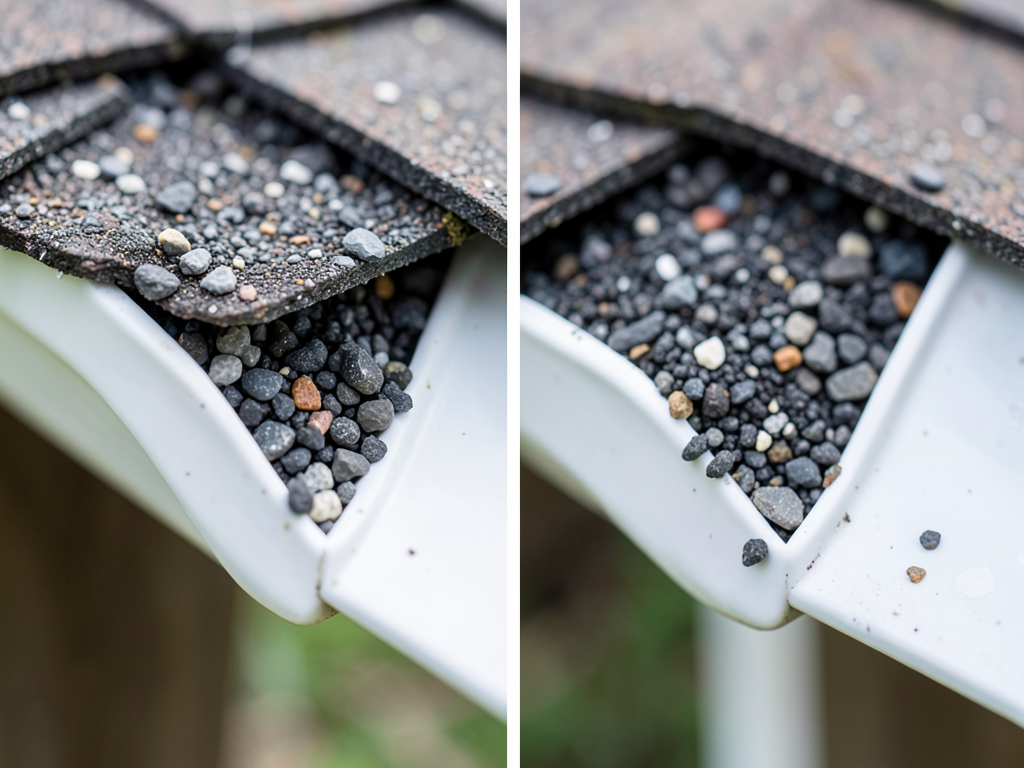
Finding sand in your gutters — What heavy granule loss means for the health of your roof
You just cleaned your gutters and noticed a gritty black sand collecting in the bottom. That’s not dirt. Those are asphalt granules from your roof shingles. In San Antonio’s harsh climate where UV radiation and hail storms are common, this is often the first sign your roof is aging faster than expected. How to get your San Antonio roof fixed after a major hail storm.
Is granule loss normal? New roof vs. old roof
Some granule shedding happens with every roof. New shingles often lose a small amount of loose granules during the first few months after installation. This is normal factory surfacing. But heavy granule loss from an older roof means the asphalt is breaking down. The protective mineral coating that shields your shingles from UV rays is wearing away. Once that layer is gone, your shingles age rapidly and can fail within a year or two.. Read more about How to spot hidden roof damage after a San Antonio windstorm.
4 common causes of shingle grit in San Antonio
Thermal shock
San Antonio summers regularly hit 100°F. When a sudden afternoon thunderstorm drops the temperature by 30 degrees in minutes, your shingles expand and contract rapidly. This stress weakens the bond between granules and asphalt. Over years, this thermal cycling causes accelerated granule loss especially on south-facing slopes. What to do when your San Antonio roof starts leaking in the middle of a storm.
Hail damage
South Texas gets frequent hail events. Hailstones bruise shingles by knocking off granules and creating soft spots. You might not see holes but the bruising shows as dark circular areas where granules are missing. These spots become weak points that leak later. Hail damage often looks like someone scattered gravel across your roof.
3>Age and UV degradation
Texas sunshine is brutal on asphalt. UV radiation breaks down the chemical bonds in shingle materials. A 15-year-old roof in San Antonio often looks like a 25-year-old roof from a cooler climate. The granules become brittle and flake off. You will see widespread thinning rather than just a few spots.
Poor attic ventilation
When your attic traps heat, temperatures can exceed 150°F. This bakes shingles from below. The asphalt softens and granules fall off. Signs include curled shingle edges and heavy granule accumulation in gutters. Proper ventilation can add years to your roof’s life.. Read more about The Best Gutter Guard Systems for Heavily Wooded Lots in Hidden Forest.
How much granule loss is too much?
A few tablespoons of granules per gutter after a storm is normal. But if you are filling a small bucket every cleaning or seeing bald spots where the fiberglass mat shows through, your roof is in trouble. The “50% rule” applies. When more than half your shingles have significant granule loss, the roof can no longer protect your home effectively. Water infiltration and interior damage become likely.
Repair or replace? Diagnostic steps
Before calling a contractor, check these signs. Look in your downspouts for granule buildup. Inspect your shingles for bald patches especially on south and west exposures. Check for curling or cracking at the edges. If your roof is over 12 years old and showing multiple warning signs, replacement is usually the better investment. Small repairs on a failing roof often lead to bigger problems later.
Protecting your San Antonio home
Regular inspections catch problems early. After hail storms check for bruising. Clean your gutters twice a year to monitor granule loss. Consider impact-resistant shingles if you are replacing your roof. Class 4 shingles survive hail up to two inches and may lower your insurance premiums. In neighborhoods like Stone Oak and Alamo Heights where large trees drop debris, clean gutters also prevent granule loss from debris abrasion.
Local factors affecting your roof
San Antonio’s combination of intense UV exposure, frequent hail, and thermal cycling creates unique challenges. Homes in Universal City and Converse often show accelerated aging compared to roofs in cooler climates. The Edwards Aquifer recharge zone also means higher humidity which can promote algae growth on shingles. This creates dark streaks that trap heat and speed deterioration.
When to call a professional
If you see widespread granule loss, bald spots, or signs of water damage inside your home, get a professional inspection. Do not wait until you have a leak. Summit Roofing San Antonio offers free inspections to evaluate your roof’s condition. We will show you exactly what we find and explain your options without pressure. Built-Up Roofing (BUR).
Call us today at (726) 256-6199 for your free roof inspection. Do not let granule loss turn into costly water damage. Protect your home now.
Frequently Asked Questions
Is some granule loss normal for a new roof?
Yes. New shingles often shed loose granules during the first few months after installation. This is normal factory surfacing and not a cause for concern.
Can I prevent granule loss?
You cannot stop normal aging but you can slow it. Ensure proper attic ventilation, clean gutters regularly, and consider impact-resistant shingles in hail-prone areas.
Will my insurance cover granule loss?
Insurance typically covers sudden damage like hail but not normal wear and tear. If hail damage caused the loss, you may have coverage for repairs or replacement.
How long should asphalt shingles last in San Antonio?
Standard shingles last 12-15 years in our climate. Architectural shingles with better UV protection can last 20-25 years with proper maintenance. For more information, visit FEMA. For more information, visit National Roofing Contractors Association.
{
“@context”: “https://schema.org”,
“@type”: “BlogPosting”,
“headline”: “Finding sand in your gutters — What heavy granule loss means for the health of your roof”,
“description”: “Noticing black sand in your gutters? This San Antonio guide explains what shingle granule loss means, when to worry, and how our extreme climate affects your roof’s lifespan.”,
“wordCount”: 904,
“datePublished”: “2026-05-02T12:48:00.000Z”,
“dateModified”: “2026-05-02T12:48:00.000Z”,
“inLanguage”: “en-US”,
“mainEntityOfPage”: {
“@type”: “WebPage”,
“@id”: “https://summitroofingsanantonio.com”
},
“publisher”: {
“@type”: “LocalBusiness”,
“name”: “Summit Roofing San Antonio”,
“url”: “https://summitroofingsanantonio.com”
},
“author”: {
“@type”: “Organization”,
“name”: “Summit Roofing San Antonio”,
“url”: “https://summitroofingsanantonio.com”
},
“image”: {
“@type”: “ImageObject”,
“url”: “https://summitroofingsanantonio.com/wp-content/uploads/2026/03/finding-sand-in-your-gutters-what-heavy-granule-lo-1.png”
}
}
{
“@context”: “https://schema.org”,
“@type”: “RoofingContractor”,
“name”: “Summit Roofing San Antonio”,
“url”: “https://summitroofingsanantonio.com”,
“address”: {
“@type”: “PostalAddress”,
“addressLocality”: “San Antonio”
},
“areaServed”: {
“@type”: “City”,
“name”: “San Antonio”
}
}
{
“@context”: “https://schema.org”,
“@type”: “FAQPage”,
“mainEntity”: [
{
“@type”: “Question”,
“name”: “How much granule loss is too much?”,
“acceptedAnswer”: {
“@type”: “Answer”,
“text”: “A few tablespoons of granules per gutter after a storm is normal. But if you are filling a small bucket every cleaning or seeing bald spots where the fiberglass mat shows through, your roof is in trouble. The \”50% rule\” applies. When more than half your shingles have significant granule loss, the roof can no longer protect your home effectively. Water infiltration and interior damage become likely.”
}
},
{
“@type”: “Question”,
“name”: “Is some granule loss normal for a new roof?”,
“acceptedAnswer”: {
“@type”: “Answer”,
“text”: “Yes. New shingles often shed loose granules during the first few months after installation. This is normal factory surfacing and not a cause for concern.”
}
},
{
“@type”: “Question”,
“name”: “Can I prevent granule loss?”,
“acceptedAnswer”: {
“@type”: “Answer”,
“text”: “You cannot stop normal aging but you can slow it. Ensure proper attic ventilation, clean gutters regularly, and consider impact-resistant shingles in hail-prone areas.”
}
},
{
“@type”: “Question”,
“name”: “Will my insurance cover granule loss?”,
“acceptedAnswer”: {
“@type”: “Answer”,
“text”: “Insurance typically covers sudden damage like hail but not normal wear and tear. If hail damage caused the loss, you may have coverage for repairs or replacement.”
}
}
]
}
{
“@context”: “https://schema.org”,
“@type”: “BreadcrumbList”,
“itemListElement”: [
{
“@type”: “ListItem”,
“position”: 1,
“name”: “Home”,
“item”: “https://summitroofingsanantonio.com”
},
{
“@type”: “ListItem”,
“position”: 2,
“name”: “Blog”,
“item”: “https://summitroofingsanantonio.com/blog”
},
{
“@type”: “ListItem”,
“position”: 3,
“name”: “Finding sand in your gutters — What heavy granule loss means for the health of your roof”
}
]
}
{
“@context”: “https://schema.org”,
“@type”: “Service”,
“serviceType”: “Roofing”,
“provider”: {
“@type”: “LocalBusiness”,
“name”: “Summit Roofing San Antonio”,
“url”: “https://summitroofingsanantonio.com”
},
“areaServed”: {
“@type”: “City”,
“name”: “San Antonio”
},
“description”: “Noticing black sand in your gutters? This San Antonio guide explains what shingle granule loss means, when to worry, and how our extreme climate affects your roof’s lifespan.”
}