
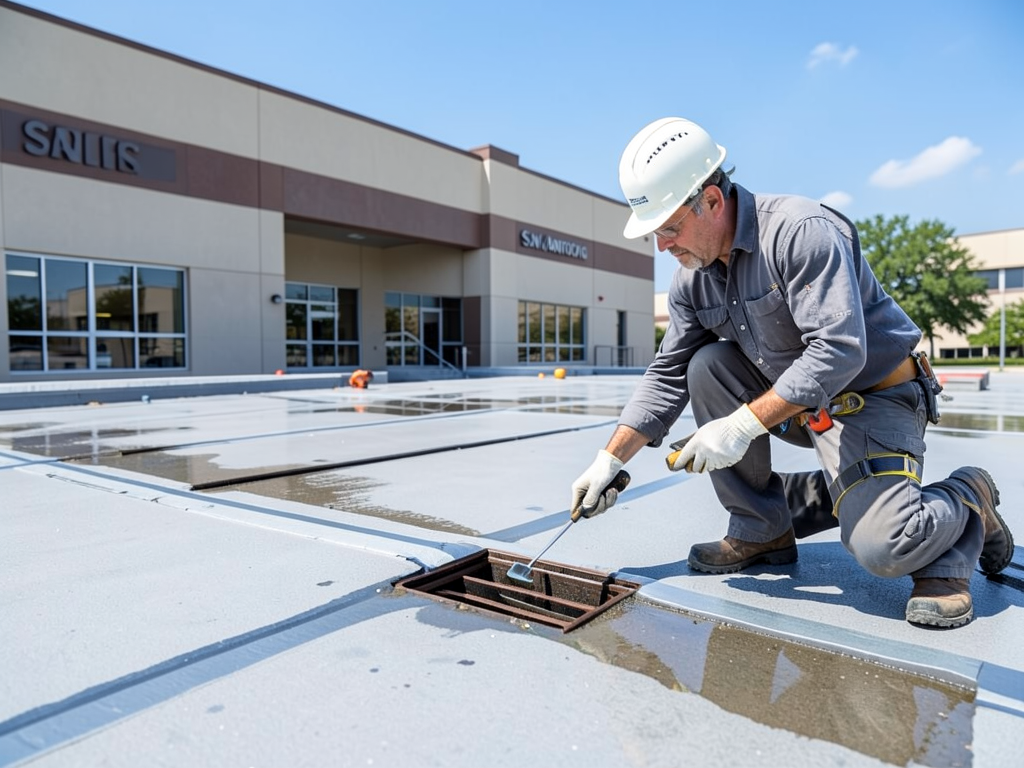
How to stop standing water from turning your flat roof into a breeding ground for mosquitoes
Standing water on a flat roof creates more than just a nuisance in San Antonio. The combination of our intense summer heat and frequent flash flooding creates perfect conditions for water to pool on commercial and residential flat roofs. This standing water becomes a breeding ground for mosquitoes within days and can cause serious structural damage to your building if left unaddressed. How to get your San Antonio roof fixed after a major hail storm.
The problem goes beyond bugs. Water that sits on your roof for more than 48 hours can accelerate membrane degradation from UV exposure. The weight of ponding water can stress your roof structure. And in San Antonio’s climate where temperatures regularly exceed 95°F, that water acts like a magnifying glass on your roofing materials. What to do when your San Antonio roof starts leaking in the middle of a storm.
What makes standing water dangerous for San Antonio roofs?
The 48-hour rule is the industry standard for defining ponding water. If water remains on your roof for longer than 48 hours after rainfall stops, you have a drainage problem that needs immediate attention. In San Antonio’s climate, this becomes even more critical because:. Read more about Why San Antonio restaurant owners should worry about grease trap runoff on their roofs.
- High UV index (often above 10) accelerates chemical breakdown of roofing membranes
- Rapid evaporation cycles create thermal stress on roofing materials
- Debris from live oak trees and cedar elms can clog drains during heavy storms
- Expansive clay soils cause building settlement that creates low spots on roofs
When water pools in these low areas, it doesn’t just sit there harmlessly. The constant moisture breaks down adhesives and seams in your roofing system. Over time, this leads to leaks, mold growth, and potentially catastrophic structural failure if the weight becomes excessive.
Common causes of standing water on San Antonio commercial roofs
Understanding why water pools on your roof is the first step to solving the problem. In San Antonio, several factors contribute to poor drainage: Understanding Roof Warranties.
Structural deflection occurs when the roof deck sags over time due to the weight of the roofing system and any equipment installed on top. This creates natural low points where water collects. In older buildings in neighborhoods like Alamo Heights or Terrell Hills, this is particularly common.
Improper drainage design is another major culprit. Many San Antonio commercial buildings were constructed before modern drainage requirements were established. The original drain placement may be insufficient for today’s larger roof areas or the intense rainfall we experience during storm season.
Compressed insulation happens when maintenance crews walk repeatedly in the same areas or when heavy equipment is installed without proper load distribution. This creates depressions that hold water. Buildings near industrial areas like Brooks City Base or Port San Antonio often face this issue.
Clogged drains and scuppers are perhaps the most preventable cause. San Antonio’s combination of heavy rains and tree-lined streets means debris accumulates quickly. A single thunderstorm can wash enough leaves and twigs to block your drainage system completely.
Four proven solutions to eliminate ponding water
Solving standing water problems requires addressing the root cause rather than just the symptom. Here are four proven approaches that work in San Antonio’s climate:
Tapered insulation systems
Tapered insulation creates a slight slope across your flat roof, directing water toward drains and scuppers. This ISO board system can be installed over your existing roof, eliminating the need for complete replacement in many cases.
The system works by using different thicknesses of insulation to create a gradual slope of at least 1/4 inch per foot. This subtle angle is enough to move water but not so steep that it’s visible from the ground. For buildings in areas like Stone Oak or The Dominion where aesthetics matter, this is often the preferred solution.
The installation process involves removing existing ballast or pavers, installing the tapered insulation in a strategic pattern, then adding a new membrane. The result is a roof that drains properly within minutes of rainfall ending rather than hours.
Roof crickets and saddles
Roof crickets are small, sloped structures that divert water around obstacles like HVAC units, skylights, or equipment curbs. They’re particularly effective for buildings in San Antonio’s industrial areas where rooftop equipment is common.
These structures work by creating a path of least resistance for water. Instead of pooling around equipment bases, water flows around the obstacle toward designated drainage points. Crickets can be built from the same materials as your roof or from lighter composite materials for easier installation.
Saddles serve a similar purpose but are used to create high points that separate drainage areas. They’re especially useful on large commercial roofs where you need to divide the surface into manageable drainage zones. EPA mosquito control guidelines.
Professional drain and scupper adjustment
Sometimes the solution is simpler than you think. Many San Antonio buildings have functional drains that are just installed at the wrong height or have become blocked by settling.. Read more about Turning Your Southtown Flat Roof into a Functional Deck or Patio Space.
Professional adjustment involves lowering drain sumps to the correct depth, widening scupper openings to handle San Antonio’s heavy rainfall, or adding secondary drains for redundancy. This work requires understanding local building codes and rainfall patterns specific to Bexar County.
For buildings in flood-prone areas like those near the San Antonio River or Salado Creek, this might also include installing backflow preventers to stop water from re-entering the roof during extreme weather events.
Silicone roof coatings with moisture-cure properties
Silicone coatings offer a different approach to the ponding water problem. Unlike acrylic coatings that fail when submerged, moisture-cure silicone actually cures faster when exposed to standing water. How much a new roof actually costs in San Antonio right now.
This makes silicone ideal for San Antonio’s climate where afternoon thunderstorms can drop several inches of rain in an hour. The coating forms a seamless, waterproof membrane that bridges small cracks and seams while remaining flexible enough to handle thermal expansion.
The application process involves cleaning the existing roof thoroughly, repairing any damaged areas, then applying the silicone coating at the manufacturer’s specified thickness. The result is a reflective surface that reduces heat gain while solving drainage issues.
The cost of ignoring ponding water
Many San Antonio property owners delay addressing ponding water because they’re concerned about upfront costs. However, the long-term expenses of inaction far exceed the cost of proper repair.
Structural weight limits become a serious concern when water pools. A single inch of standing water across a 10,000 square foot roof adds approximately 5,200 pounds of weight. Most commercial roof structures are designed to handle this load temporarily, but prolonged exposure can cause joist sagging and even structural failure. How to Get Your Commercial Flat Roof Ready for San Antonio Summer Storms.
Membrane replacement costs increase dramatically when ponding water is involved. What might have been a simple coating application becomes a full tear-off and replacement because the underlying structure has been compromised. The difference in cost can be 3-5 times higher.
Insurance complications arise when ponding water leads to damage. Many policies exclude damage resulting from poor maintenance, and ponding water is often considered a maintenance issue rather than a sudden event. This means you could be paying for repairs out of pocket that would have been covered if addressed promptly.
Business interruption costs can be substantial for commercial properties. A warehouse in Converse or Kirby that develops a major leak during storm season might need to shut down operations for days or weeks while repairs are completed. The lost revenue during this time often exceeds the repair cost many times over.
Why San Antonio businesses choose professional flat roof repair
Flat roof repair in San Antonio requires understanding local conditions that national chains simply don’t have. Our combination of intense UV exposure, frequent thunderstorms, and specific building codes creates unique challenges. National Roofing Contractors Association.
Local contractors understand that San Antonio’s Building Code requires specific drainage calculations based on the 100-year storm event. They know that buildings in the Edwards Aquifer recharge zone have additional environmental considerations. And they understand how the thermal expansion of roofing materials differs in our climate compared to other regions.
Professional repair also includes proper permitting and inspections. San Antonio requires permits for most roof modifications, and work that isn’t properly permitted can cause issues when you try to sell your property or file insurance claims.
Most importantly, experienced local contractors can assess whether your ponding water issue is isolated or symptomatic of larger structural problems. They’ll identify issues like joist deflection or foundation settlement that might be causing your drainage problems and recommend comprehensive solutions rather than temporary fixes.
DIY vs. professional: when to call an expert
Property owners often wonder if they can handle ponding water issues themselves. While some maintenance tasks are appropriate for DIY, structural drainage problems usually require professional expertise.
You can handle basic maintenance like clearing debris from drains and scuppers. This should be done at least twice yearly, typically in spring before storm season and in fall after leaves drop. Using a garden hose to flush drains and checking for proper flow is also appropriate for most property owners.
However, you should call a professional when you notice any of these signs: water remaining after 48 hours, visible sagging in the roof deck, cracks in ceiling drywall, or if you’re unsure about the structural integrity of your building. Also, any work involving structural modifications, electrical components near HVAC equipment, or warranty considerations should be handled by licensed professionals.
For commercial properties, the liability considerations alone make professional repair worthwhile. A contractor’s insurance covers any accidental damage, and their work is typically warrantied. DIY repairs that fail can leave you responsible for both the original damage and any additional damage that occurs.
Preventing future ponding water issues
Once you’ve solved your current ponding water problem, preventing recurrence is crucial. San Antonio’s climate means new issues can develop quickly if you’re not proactive.
Regular inspections are your best defense. Schedule professional roof inspections at least annually, with additional checks after major storms. Look for new low spots, check that all drains are flowing freely, and ensure that any rooftop equipment hasn’t shifted and created new drainage obstacles.
Maintenance of drainage components is equally important. Clean scuppers, downspouts, and internal drains seasonally. In San Antonio, this often means more frequent cleaning during spring when oak pollen and seed pods are abundant.
Consider installing overflow drains as a backup system. These provide a secondary path for water if your primary drains become blocked during a major storm. While not required by all building codes, they’re a wise addition in San Antonio’s storm-prone climate.
Monitor your building’s foundation as well. The expansive clay soils common in San Antonio can cause building settlement that affects your roof’s slope. If you notice cracks in walls or doors that stick, your foundation might be shifting and creating new low spots on your roof.
Protecting your investment with proper drainage
Your roof represents a significant investment in your property. Whether you own a commercial building in San Antonio’s medical center area or a residential property in Schertz, proper drainage protects that investment.
Standing water doesn’t just cause immediate problems like mosquito breeding and leaks. It accelerates the aging of your entire roofing system, potentially shortening its lifespan by years. This means you’ll be facing replacement costs much sooner than necessary.
Good drainage also improves your building’s energy efficiency. Water that pools on your roof increases heat retention, making your cooling system work harder during San Antonio’s long summer. A properly sloped roof with reflective coating can reduce your energy costs while preventing water damage.
Finally, proper drainage maintains your property value. Potential buyers and tenants view ponding water as a red flag, often assuming there are hidden problems beyond what’s visible. A roof with good drainage and no history of leaks is a strong selling point in any real estate transaction.
Take action before small problems become major expenses
Ponding water on your flat roof isn’t just an inconvenience—it’s a warning sign that requires attention. In San Antonio’s climate, what starts as a small drainage issue can escalate to major structural damage within a single storm season.
The good news is that most ponding water problems can be solved cost-effectively if addressed early. Whether you need tapered insulation, drain adjustment, or a complete coating system, the solution is available and the cost is almost always less than dealing with the consequences of inaction.
Don’t wait until you’re dealing with ceiling leaks, mosquito infestations, or insurance claim denials. A professional inspection can identify your specific issues and recommend the most cost-effective solution for your situation.
Call Summit Roofing San Antonio today at (726) 256-6199 for a free inspection and drainage assessment. Our local experts understand San Antonio’s unique roofing challenges and can provide solutions that last. Protect your property from water damage, mosquitoes, and unnecessary expenses with proper drainage solutions designed for our climate.
Frequently Asked Questions
How long can water safely sit on a flat roof?
Industry standards consider water ponding if it remains for more than 48 hours after rainfall ends. In San Antonio’s climate, addressing drainage issues within this timeframe prevents most damage and mosquito breeding.
Can I fix ponding water myself?
Basic maintenance like clearing debris from drains is appropriate for most property owners. However, structural modifications, warranty considerations, and issues involving the roof deck require professional expertise to avoid liability and ensure proper repair.
How much does it cost to fix ponding water on a flat roof?
Costs vary widely based on the solution needed. Simple drain cleaning might cost a few hundred dollars, while tapered insulation systems typically range from $3-8 per square foot installed. A professional inspection can provide accurate pricing for your specific situation.
Will insurance cover damage from ponding water?
Most insurance policies exclude damage resulting from poor maintenance. Ponding water is generally considered a maintenance issue rather than a sudden event, so repairs are typically out-of-pocket expenses unless you have specific water damage coverage.
How often should I inspect my flat roof for drainage issues?
Professional inspections should be conducted annually, with additional checks after major storms. In San Antonio, seasonal inspections in spring and fall help catch issues before storm season and after leaf drop when debris accumulation is highest.
{
“@context”: “https://schema.org”,
“@type”: “BlogPosting”,
“headline”: “How to stop standing water from turning your flat roof into a breeding ground for mosquitoes”,
“description”: “Standing water on your San Antonio flat roof attracts mosquitoes and causes serious damage. Learn proven drainage solutions to protect your property.”,
“wordCount”: 2396,
“datePublished”: “2026-05-27T10:05:00.000Z”,
“dateModified”: “2026-05-27T10:05:00.000Z”,
“inLanguage”: “en-US”,
“mainEntityOfPage”: {
“@type”: “WebPage”,
“@id”: “https://summitroofingsanantonio.com”
},
“publisher”: {
“@type”: “LocalBusiness”,
“name”: “Summit Roofing San Antonio”,
“url”: “https://summitroofingsanantonio.com”
},
“author”: {
“@type”: “Organization”,
“name”: “Summit Roofing San Antonio”,
“url”: “https://summitroofingsanantonio.com”
},
“image”: {
“@type”: “ImageObject”,
“url”: “https://summitroofingsanantonio.com/wp-content/uploads/2026/03/how-to-stop-standing-water-from-turning-your-flat-1.png”
}
}
{
“@context”: “https://schema.org”,
“@type”: “RoofingContractor”,
“name”: “Summit Roofing San Antonio”,
“url”: “https://summitroofingsanantonio.com”,
“address”: {
“@type”: “PostalAddress”,
“addressLocality”: “San Antonio”
},
“areaServed”: {
“@type”: “City”,
“name”: “San Antonio”
}
}
{
“@context”: “https://schema.org”,
“@type”: “FAQPage”,
“mainEntity”: [
{
“@type”: “Question”,
“name”: “What makes standing water dangerous for San Antonio roofs?”,
“acceptedAnswer”: {
“@type”: “Answer”,
“text”: “The 48-hour rule is the industry standard for defining ponding water. If water remains on your roof for longer than 48 hours after rainfall stops, you have a drainage problem that needs immediate attention. In San Antonio’s climate, this becomes even more critical because:”
}
},
{
“@type”: “Question”,
“name”: “How long can water safely sit on a flat roof?”,
“acceptedAnswer”: {
“@type”: “Answer”,
“text”: “Industry standards consider water ponding if it remains for more than 48 hours after rainfall ends. In San Antonio’s climate, addressing drainage issues within this timeframe prevents most damage and mosquito breeding.”
}
},
{
“@type”: “Question”,
“name”: “Can I fix ponding water myself?”,
“acceptedAnswer”: {
“@type”: “Answer”,
“text”: “Basic maintenance like clearing debris from drains is appropriate for most property owners. However, structural modifications, warranty considerations, and issues involving the roof deck require professional expertise to avoid liability and ensure proper repair.”
}
},
{
“@type”: “Question”,
“name”: “How much does it cost to fix ponding water on a flat roof?”,
“acceptedAnswer”: {
“@type”: “Answer”,
“text”: “Costs vary widely based on the solution needed. Simple drain cleaning might cost a few hundred dollars, while tapered insulation systems typically range from $3-8 per square foot installed. A professional inspection can provide accurate pricing for your specific situation.”
}
},
{
“@type”: “Question”,
“name”: “Will insurance cover damage from ponding water?”,
“acceptedAnswer”: {
“@type”: “Answer”,
“text”: “Most insurance policies exclude damage resulting from poor maintenance. Ponding water is generally considered a maintenance issue rather than a sudden event, so repairs are typically out-of-pocket expenses unless you have specific water damage coverage.”
}
},
{
“@type”: “Question”,
“name”: “How often should I inspect my flat roof for drainage issues?”,
“acceptedAnswer”: {
“@type”: “Answer”,
“text”: “Professional inspections should be conducted annually, with additional checks after major storms. In San Antonio, seasonal inspections in spring and fall help catch issues before storm season and after leaf drop when debris accumulation is highest.”
}
}
]
}
{
“@context”: “https://schema.org”,
“@type”: “BreadcrumbList”,
“itemListElement”: [
{
“@type”: “ListItem”,
“position”: 1,
“name”: “Home”,
“item”: “https://summitroofingsanantonio.com”
},
{
“@type”: “ListItem”,
“position”: 2,
“name”: “Blog”,
“item”: “https://summitroofingsanantonio.com/blog”
},
{
“@type”: “ListItem”,
“position”: 3,
“name”: “How to stop standing water from turning your flat roof into a breeding ground for mosquitoes”
}
]
}
{
“@context”: “https://schema.org”,
“@type”: “Service”,
“serviceType”: “Roofing”,
“provider”: {
“@type”: “LocalBusiness”,
“name”: “Summit Roofing San Antonio”,
“url”: “https://summitroofingsanantonio.com”
},
“areaServed”: {
“@type”: “City”,
“name”: “San Antonio”
},
“description”: “Standing water on your San Antonio flat roof attracts mosquitoes and causes serious damage. Learn proven drainage solutions to protect your property.”
}