
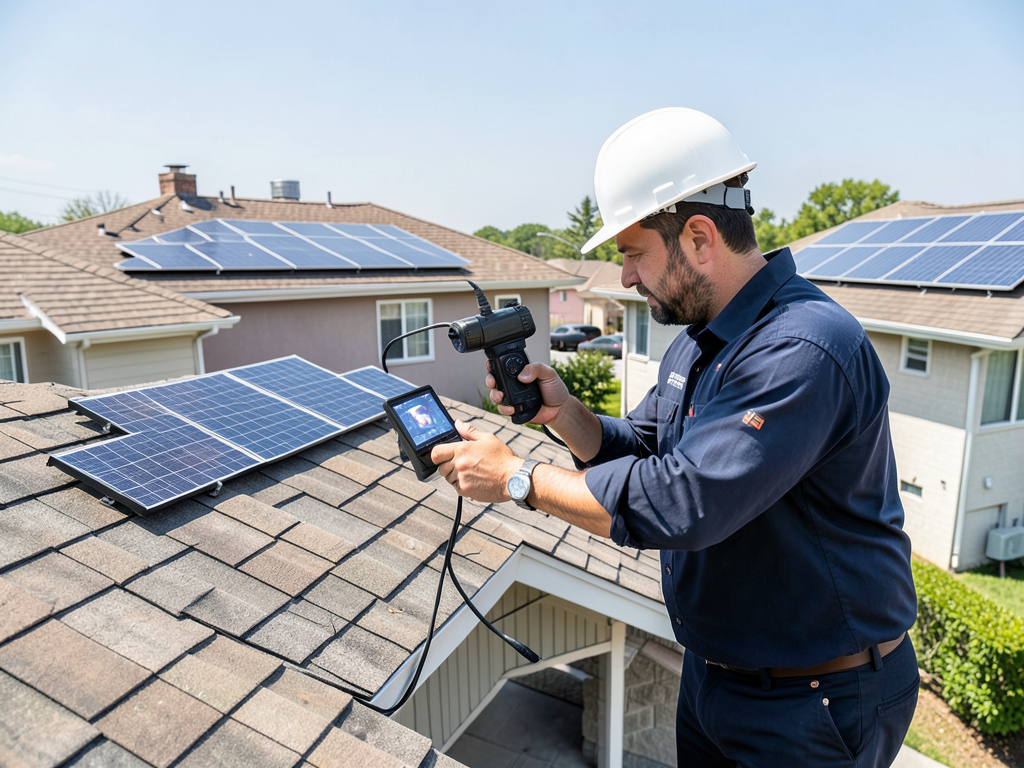
What every San Antonio homeowner needs to do to their roof before installing solar panels
Solar panels represent a significant investment for San Antonio homeowners looking to reduce energy costs and increase property value. However many homeowners overlook a critical factor that can make or break their solar project. The condition of your roof determines whether your solar installation succeeds or becomes an expensive mistake. Energy Department solar guide.
Installing solar panels on a compromised roof creates multiple problems. First the weight of the panels combined with mounting hardware adds stress to existing roof structures. Second if your roof needs replacement within the next 10 to 15 years you will pay to remove and reinstall the solar system. Third San Antonio’s extreme weather conditions including intense UV exposure and frequent hailstorms can accelerate roof deterioration under solar panels. How to get your San Antonio roof fixed after a major hail storm.
This guide walks you through the essential roof preparation steps every San Antonio homeowner must complete before committing to solar installation. We focus on local climate conditions building requirements and structural considerations specific to South Texas. What to do when your San Antonio roof starts leaking in the middle of a storm.
Why roof preparation is non-negotiable before solar installation
Solar panels typically last 25 to 30 years. Your roof must last at least as long or you face significant additional costs. Removing and reinstalling a solar system costs between $2,000 and $5,000 depending on system size and complexity. How much a new roof actually costs in San Antonio right now.
San Antonio’s climate creates unique challenges. The city experiences over 220 sunny days annually which benefits solar production but also subjects roofs to extreme UV radiation. This accelerates shingle degradation and can void manufacturer warranties if panels trap heat against deteriorating materials. Understanding Roof Warranties.
Hail damage presents another major concern. Bexar County experiences frequent severe hailstorms particularly in spring and fall. Standard asphalt shingles often fail to withstand impacts from hailstones larger than one inch in diameter.. Read more about How to spot hidden roof damage after a San Antonio windstorm.
Local building codes require specific structural assessments for roof-mounted solar systems. The San Antonio Development Services Department mandates engineering calculations showing your roof can support the additional 2.5 to 4 pounds per square foot that solar panels add.
Step 1: Professional roof inspection and structural assessment
Before proceeding with solar installation schedule a comprehensive roof inspection with a licensed roofing contractor. This inspection must evaluate more than surface condition.
A qualified inspector examines roof decking for signs of water damage rot or structural weakness. They check attic spaces for proper ventilation and insulation. They measure roof pitch and identify areas where solar mounting brackets will attach.
Structural engineers calculate load-bearing capacity using your roof’s construction materials and design. Most residential roofs built after 2000 can support standard solar panel arrays but older homes especially those in historic neighborhoods like King William may require reinforcement.
The inspection should include thermal imaging to detect moisture intrusion that might not be visible from the surface. Water trapped under roofing materials expands when heated creating additional stress points that solar mounting hardware can exacerbate.
Assessing your roofing material: Is it solar-ready?
Different roofing materials require different preparation approaches for solar installation. Your material choice affects both installation costs and long-term performance.
Asphalt shingles dominate San Antonio neighborhoods like Alamo Heights and Terrell Hills. These materials work well with solar but typically need replacement every 15 to 20 years. If your asphalt roof is over 10 years old consider replacement before solar installation.
Tile roofs common in Spanish Colonial and Mediterranean-style homes throughout Monte Vista require specialized mounting systems. Solar installers must use tile replacement mounts that maintain the roof’s waterproof integrity. These installations cost more but tile roofs often last 30 to 50 years.
Metal roofs particularly standing seam varieties offer excellent solar mounting options. Installers can attach panels without penetrating the roof surface using clamps that grip the seams. This reduces leak risks and extends system longevity.
Flat roofs on commercial buildings and some modern homes require ballast mounting systems or minimal-penetration designs. These systems must account for San Antonio’s high winds which can reach 70 mph during summer thunderstorms. How to Get Your Commercial Flat Roof Ready for San Antonio Summer Storms.
San Antonio weather considerations: Hail heat and wind
San Antonio ranks among the top U.S. cities for hail damage claims. The city experiences 6 to 8 significant hailstorms annually with stones often exceeding one inch in diameter.
Class 4 impact-resistant shingles provide the best protection for solar-ready roofs. These shingles withstand hailstones up to two inches without cracking. Insurance companies often offer premium discounts for homes with Class 4 materials potentially offsetting the 15 to 20 percent higher material costs.
Heat management becomes critical when solar panels cover portions of your roof. Panels create shade but also trap heat against roofing materials. High-temperature underlayment rated for 240 degrees Fahrenheit prevents premature deterioration in San Antonio’s 100-degree summer heat.
Wind uplift forces increase with solar installations. Your roof must meet or exceed local building code requirements for wind zone 3 which covers most of Bexar County. This typically means enhanced fastening systems and hurricane-rated underlayment.
Humidity creates additional challenges. San Antonio’s 68 percent average relative humidity promotes algae and moss growth especially on north-facing roof sections. These organisms retain moisture and accelerate material breakdown under solar panels.
To repair or replace? Calculating the remaining useful life
Determining whether to repair or replace your roof requires honest assessment of its current condition and expected lifespan.
Most roofing materials show specific warning signs. Asphalt shingles develop curling edges cracked surfaces and granule loss. Tile roofs crack or break under impact. Metal roofs corrode at seams and fasteners.
Calculate your roof’s remaining useful life using these factors. Standard three-tab asphalt shingles last 15 to 20 years. Architectural shingles last 20 to 30 years. Tile and metal roofs can last 50 years or more with proper maintenance.
Consider your home’s age and neighborhood. Homes in established areas like Terrell Hills or Olmos Park often have original roofs nearing replacement age. Newer developments in Stone Oak or Cibolo may have roofs with 15 to 20 years of remaining life.
Factor in San Antonio’s climate acceleration. The combination of UV exposure high heat and severe weather typically reduces roof life by 20 to 30 percent compared to national averages.
Cost analysis helps decision-making. A new roof costs $8,000 to $15,000 for average homes. Solar panel systems cost $15,000 to $25,000. Installing both simultaneously allows you to claim the 30 percent federal solar tax credit on the entire project potentially saving $7,000 to $12,000.
Key upgrades: Flashing mounting points and ventilation
Proper flashing installation prevents water intrusion at penetration points where solar mounting hardware attaches to your roof. Professional installers use metal flashing specifically designed for solar applications rather than standard roof flashing.
Mounting point spacing depends on your roof’s truss configuration and the solar array’s weight distribution. Installers typically space mounting feet every four to six feet along rafters. This requires locating and marking all structural supports before drilling any holes.
Ventilation becomes more critical with solar installations. Panels create pockets of stagnant air that trap heat. Your roof needs adequate intake and exhaust ventilation to prevent heat buildup that can damage both roofing materials and solar equipment.
High-temperature underlayment provides an additional moisture barrier under solar panel arrays. This synthetic material withstands temperatures that would melt standard felt paper. It also provides better protection if solar panels must be removed temporarily.
Edge sealing prevents wind-driven rain from entering under solar panels. Installers apply specialized sealants along panel edges creating a weatherproof barrier that accommodates thermal expansion and contraction.
Local San Antonio regulations and CPS Energy requirements
San Antonio’s Development Services Department requires permits for all roof-mounted solar installations. The permitting process includes structural engineering review to verify your roof meets load-bearing requirements.
CPS Energy offers solar rebate programs that require specific installation standards. Their Distributed Generation program provides rebates up to $2,500 for residential systems but only if installed by certified contractors using approved mounting methods.
Net metering agreements with CPS Energy require your solar installation to meet specific electrical and structural standards. The utility company inspects systems before granting permission to connect to the grid.
Homeowners associations particularly in gated communities like The Dominion or Stone Oak may have additional requirements. Some HOAs restrict panel placement or require specific aesthetic treatments like all-black panels or concealed mounting hardware.
Fire safety regulations affect solar installations in San Antonio. The San Antonio Fire Department requires three-foot clear pathways on roofs for emergency access. This may limit available space for solar arrays especially on smaller roofs.
Checklist: Is your roof ready for solar?
Use this checklist to evaluate your roof’s solar readiness before contacting installers.
- Roof age under 10 years or recently replaced
- No active leaks or water damage
- Structural engineer certification of load capacity
- Class 4 impact-resistant shingles or approved alternative
- Proper attic ventilation (1 square foot per 150 square feet of attic space)
- High-temperature underlayment installed
- Three-foot fire access pathways available
- No significant tree shading on south-facing roof sections
- Electrical panel capacity for solar integration
- Compliance with HOA and local building codes
If you answered no to two or more items your roof needs preparation before solar installation. Addressing these issues now prevents costly problems later.
Many San Antonio homeowners discover their roofs need work after signing solar contracts. This delays projects by weeks or months and often increases total costs by 20 to 40 percent.
Professional roofers familiar with solar installations can identify potential problems early. They understand how mounting hardware affects different roofing materials and can recommend cost-effective solutions.
Consider scheduling your roof inspection during the solar evaluation phase. Many solar companies partner with roofing contractors or can recommend qualified inspectors. This coordination streamlines the preparation process.
Remember that solar represents a 25-year investment. Your roof must protect that investment by providing stable reliable support for decades. Proper preparation ensures your solar system delivers maximum energy production and return on investment.
Ready to make your roof solar-ready? Call Summit Roofing San Antonio at (726) 256-6199 for a comprehensive roof inspection and solar preparation assessment. Our team understands San Antonio’s unique climate challenges and building requirements. We help homeowners avoid costly mistakes and ensure their solar investments perform optimally for decades.
Frequently Asked Questions
How long does roof preparation for solar installation take?
Roof preparation typically requires 2 to 5 days depending on the extent of work needed. Simple repairs might take one day while complete roof replacement requires 3 to 5 days plus additional time for permitting and inspections.
Can I install solar panels on a flat roof in San Antonio?
Yes but flat roofs require specialized mounting systems. Ballast-mounted systems use weighted bases to secure panels without roof penetrations. These systems must account for San Antonio’s high winds and may require additional structural reinforcement.
Will solar panels void my roof warranty?
Solar installations can void roof warranties if not done properly. Using certified installers who follow manufacturer guidelines and installing proper flashing prevents warranty issues. Some roofing manufacturers offer solar-specific warranties that cover both roof and panel mounting systems. For more information, visit Florida Solar Energy Center roof mounting study.
{
“@context”: “https://schema.org”,
“@type”: “BlogPosting”,
“headline”: “What every San Antonio homeowner needs to do to their roof before installing solar panels”,
“description”: “Discover essential roof preparation steps for San Antonio homeowners before solar installation. Learn about structural integrity, impact-resistant shingles, and local regulations.”,
“wordCount”: 1884,
“datePublished”: “2026-04-30T06:33:00.000Z”,
“dateModified”: “2026-04-30T06:33:00.000Z”,
“inLanguage”: “en-US”,
“mainEntityOfPage”: {
“@type”: “WebPage”,
“@id”: “https://summitroofingsanantonio.com”
},
“publisher”: {
“@type”: “LocalBusiness”,
“name”: “Summit Roofing San Antonio”,
“url”: “https://summitroofingsanantonio.com”
},
“author”: {
“@type”: “Organization”,
“name”: “Summit Roofing San Antonio”,
“url”: “https://summitroofingsanantonio.com”
},
“image”: {
“@type”: “ImageObject”,
“url”: “https://summitroofingsanantonio.com/wp-content/uploads/2026/03/what-every-san-antonio-homeowner-needs-to-do-to-th-1.png”
}
}
{
“@context”: “https://schema.org”,
“@type”: “RoofingContractor”,
“name”: “Summit Roofing San Antonio”,
“url”: “https://summitroofingsanantonio.com”,
“address”: {
“@type”: “PostalAddress”,
“addressLocality”: “San Antonio”
},
“areaServed”: {
“@type”: “City”,
“name”: “San Antonio”
}
}
{
“@context”: “https://schema.org”,
“@type”: “FAQPage”,
“mainEntity”: [
{
“@type”: “Question”,
“name”: “Assessing your roofing material: Is it solar-ready?”,
“acceptedAnswer”: {
“@type”: “Answer”,
“text”: “Different roofing materials require different preparation approaches for solar installation. Your material choice affects both installation costs and long-term performance.”
}
},
{
“@type”: “Question”,
“name”: “Checklist: Is your roof ready for solar?”,
“acceptedAnswer”: {
“@type”: “Answer”,
“text”: “Use this checklist to evaluate your roof’s solar readiness before contacting installers.”
}
},
{
“@type”: “Question”,
“name”: “How long does roof preparation for solar installation take?”,
“acceptedAnswer”: {
“@type”: “Answer”,
“text”: “Roof preparation typically requires 2 to 5 days depending on the extent of work needed. Simple repairs might take one day while complete roof replacement requires 3 to 5 days plus additional time for permitting and inspections.”
}
},
{
“@type”: “Question”,
“name”: “Can I install solar panels on a flat roof in San Antonio?”,
“acceptedAnswer”: {
“@type”: “Answer”,
“text”: “Yes but flat roofs require specialized mounting systems. Ballast-mounted systems use weighted bases to secure panels without roof penetrations. These systems must account for San Antonio’s high winds and may require additional structural reinforcement.”
}
},
{
“@type”: “Question”,
“name”: “Will solar panels void my roof warranty?”,
“acceptedAnswer”: {
“@type”: “Answer”,
“text”: “Solar installations can void roof warranties if not done properly. Using certified installers who follow manufacturer guidelines and installing proper flashing prevents warranty issues. Some roofing manufacturers offer solar-specific warranties that cover both roof and panel mounting systems. For more information, visit Florida Solar Energy Center roof mounting study.”
}
}
]
}
{
“@context”: “https://schema.org”,
“@type”: “BreadcrumbList”,
“itemListElement”: [
{
“@type”: “ListItem”,
“position”: 1,
“name”: “Home”,
“item”: “https://summitroofingsanantonio.com”
},
{
“@type”: “ListItem”,
“position”: 2,
“name”: “Blog”,
“item”: “https://summitroofingsanantonio.com/blog”
},
{
“@type”: “ListItem”,
“position”: 3,
“name”: “What every San Antonio homeowner needs to do to their roof before installing solar panels”
}
]
}
{
“@context”: “https://schema.org”,
“@type”: “Service”,
“serviceType”: “Roofing”,
“provider”: {
“@type”: “LocalBusiness”,
“name”: “Summit Roofing San Antonio”,
“url”: “https://summitroofingsanantonio.com”
},
“areaServed”: {
“@type”: “City”,
“name”: “San Antonio”
},
“description”: “Discover essential roof preparation steps for San Antonio homeowners before solar installation. Learn about structural integrity, impact-resistant shingles, and local regulations.”
}