
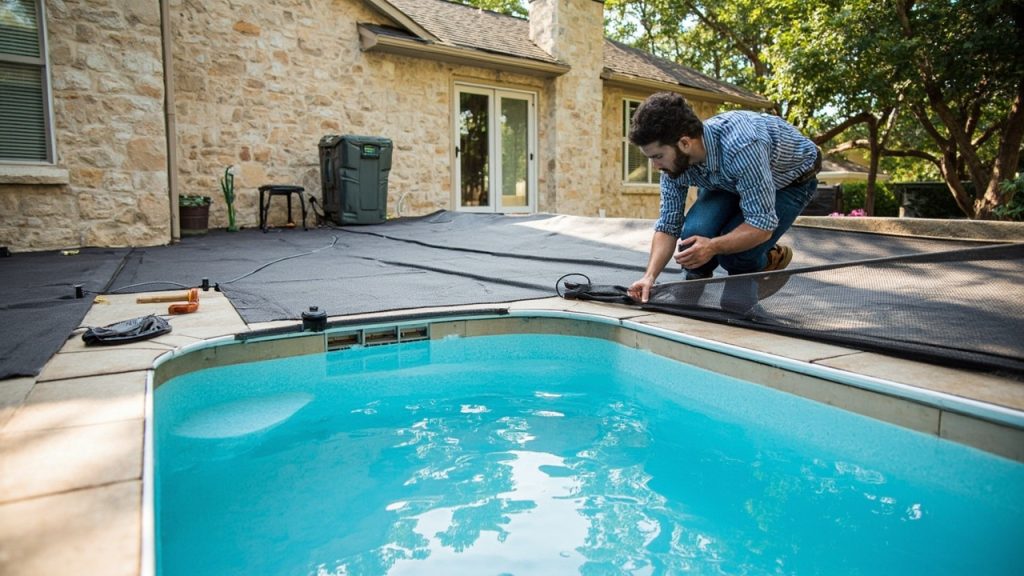
Protecting Your San Antonio Pool During Roof Replacement
Replacing a roof near a backyard pool creates unique challenges that many homeowners overlook until it’s too late. The combination of heavy roofing materials, falling debris, and fine asphalt dust can turn your pool from a summer oasis into a costly cleanup nightmare.
In San Antonio neighborhoods like Stone Oak and Alamo Heights where pool ownership is common, roofers must follow specific protocols to prevent damage to your investment. The process requires careful planning around equipment placement, debris containment, and water protection that goes far beyond standard roofing procedures.
Why Pool Proximity Creates Special Roofing Concerns
Roof replacement near water involves several risk factors unique to San Antonio’s climate and residential layouts. The intense Texas sun accelerates asphalt shingle degradation, creating more fine granule loss during tear-off. These granules sink quickly and can permanently stain plaster surfaces.
San Antonio’s clay soil causes foundation shifts that affect roof alignment, making tear-off work more unpredictable. When crews remove old materials, they cannot always control where heavy pieces land especially in tight suburban lots common in neighborhoods like The Dominion.
The high humidity also means dust particles from asphalt stick to wet surfaces immediately. Once pool water chemistry changes from contamination, restoring balance requires extensive chemical treatment and potential water replacement.
Essential Protection Steps Before Work Begins
Professional roofers protecting pools follow a specific sequence of preparations. First they assess the site layout measuring distances between the roof edge and pool perimeter. In San Antonio’s older neighborhoods like Terrell Hills narrow side yards often mean less than five feet between structures.
Next they install commercial-grade containment systems. Heavy-duty mesh netting spans from the roof edge to ground level creating a barrier that catches falling materials. Unlike standard tarps this mesh allows air circulation while stopping debris.
For the pool itself they use specialized covers different from winter pool covers. These are reinforced polyethylene sheets with sealed edges that prevent even microscopic particles from entering the water. The cover extends several feet beyond the pool edge to protect surrounding concrete.
Equipment Placement and Access Challenges
Roofing contractors must solve the puzzle of getting materials and equipment into place without damaging pool decking or equipment. In San Antonio’s hillside neighborhoods like Stone Oak this often means using smaller trucks that can navigate steep driveways without backing into pool areas.
Dump trailers get positioned on the street whenever possible rather than in driveways. When driveway use is unavoidable crews place thick plywood sheets to distribute weight and prevent cracking of concrete or pavers near the pool.
Material delivery timing becomes critical. Shingles arrive in coordinated batches rather than all at once reducing the footprint needed for storage. This staging prevents piles of materials from sitting near vulnerable pool equipment for extended periods.
Pool Equipment Protection Protocol
Pool pumps heaters and filters require special shielding during roof work. Professional crews build plywood enclosures around equipment pads using 3/4 inch sheathing to stop falling tools or materials. These boxes get sealed with plastic sheeting at the top preventing dust infiltration.
Electrical components need moisture barriers since roofing work often occurs during morning dew or after rain common in San Antonio’s climate. Crews apply waterproof covers over exposed wiring and junction boxes.
Gas heaters present unique concerns. Their venting systems can draw in fine particles during operation. Contractors often recommend temporarily disabling gas heaters during the most intensive tear-off phases especially when wind could carry debris toward vents.
San Antonio Weather Considerations
Timing roof replacement around pool usage requires understanding local weather patterns. San Antonio’s hail season runs from March through June making spring a challenging time for roof work near pools. Summer brings intense UV radiation that can affect both roofing materials and water chemistry.
Afternoon thunderstorms pop up quickly during summer months. Professional crews monitor weather radar continuously and have protocols for rapid pool cover deployment if unexpected storms approach.
Fall offers the most reliable weather but also coincides with peak pool season in San Antonio. Many homeowners delay roof work until after Labor Day when swimming frequency drops but temperatures remain warm enough for comfortable working conditions.
Debris Management and Cleanup Procedures
Beyond the initial containment system ongoing debris management proves essential. Professional crews implement magnetic sweeping multiple times daily in pool-adjacent areas. These industrial magnets pick up nails and metal fragments that could puncture pool liners or damage automatic cleaners.
Fine dust control requires specialized equipment. HEPA-filter vacuums clean surfaces around the pool deck after each workday. Crews avoid using standard leaf blowers near water since these stir up particles rather than removing them.
Water testing becomes part of the daily routine. Professional roofers check pool-adjacent areas for signs of chemical contamination or physical debris accumulation. They maintain logs documenting cleanup activities and any incidents requiring additional attention.
Liability and Insurance Considerations
Homeowners should verify contractor insurance specifics before work begins. Standard roofing policies often exclude pool damage. Ask for certificates showing coverage for water features and outdoor structures.
Professional contractors carry pollution liability insurance covering chemical contamination of water features. This becomes crucial if asphalt dust enters your pool requiring water replacement and chemical rebalancing.
Contract documents should specify responsibility for pre-existing conditions. If your pool has minor cracks or equipment issues document these with photos before work starts. This prevents disputes about damage timing later.
Timeline Impacts and Cost Factors
Roof replacement near pools typically adds one to two days to standard timelines. The additional preparation protection and cleanup extend the overall project duration. However this investment prevents far costlier pool repairs or water replacement.
Weather delays hit pool projects harder than standard roofs. If rain forces postponement crews must reset protection systems when work resumes. This can extend a week-long project to ten or twelve days during stormy seasons.
Material costs stay consistent but labor increases by 15-25% for pool-adjacent projects. The extra time spent on protection setup and meticulous cleanup gets reflected in crew hours and project management attention.
Post-Project Verification Steps
After roofing completion thorough inspection prevents future problems. Professional crews conduct detailed walkthroughs checking for nails in surrounding grass or mulch areas. They use metal detectors around pool decking to ensure complete cleanup.
Water testing should occur even if covers prevented direct contamination. Fine particles can enter through minor gaps or settle on surrounding surfaces then wash into the pool during the first rain.
Equipment function checks verify that pool pumps heaters and filters operated correctly throughout the project. Any error codes or performance issues get documented and addressed before final payment.
Choosing the Right Contractor
Not all roofers have experience with pool-adjacent projects. Ask specific questions about their protection protocols and request references from similar projects in your area. San Antonio contractors familiar with neighborhoods like Shavano Park or Hollywood Park understand the unique layouts and challenges.
Professional roofers provide written protection plans detailing their containment strategies equipment shielding and cleanup procedures. These documents should specify materials to be used and the sequence of protection installation.
Communication protocols matter significantly. Your contractor should designate a single point of contact for pool-related concerns and establish clear procedures for addressing issues that arise during the project.
Local Building Code Considerations
San Antonio building codes affect roof replacement logistics near pools. Setback requirements determine how close equipment can operate to property lines. In some cases these rules limit staging areas forcing more creative solutions.
Permit processes include inspections that may affect scheduling. Roof sheathing inspections must occur before underlayment installation. If your project requires multiple inspections timing becomes crucial especially during rainy seasons.
Pool safety regulations intersect with roofing work. If your project involves modifying roof drainage new downspout placement must comply with local codes regarding proximity to pool barriers and drainage away from pool decking.
Common Mistakes to Avoid
DIY protection attempts often fail. Standard tarps blow off in Texas winds. Plastic sheeting tears under falling debris weight. Professional-grade materials and installation techniques make the difference between success and costly damage.
Delaying protection until after tear-off begins invites problems. Once debris starts falling containment becomes much harder. Professional crews install all protection systems before any roofing material removal begins.
Assuming all roofers have pool experience proves risky. Many contractors handle only standard roof replacements without specialized protocols for water features. Verify specific experience before signing contracts.
Cost-Benefit Analysis
Professional pool protection during roof replacement typically costs 3-5% of the total roofing project. For a $15000 roof replacement this means $450-750 for comprehensive protection.
Compare this to potential costs of pool damage: water replacement at $500-1500 chemical rebalancing at $200-400 and possible equipment repairs at $300-2000. The protection investment often pays for itself by preventing even minor incidents.
Time savings matter too. DIY cleanup after debris contamination can take days of your time. Professional protection means your pool remains ready for use immediately after roofing completion.
Environmental Considerations
Roof replacement generates significant waste. Professional contractors recycle asphalt shingles when possible. In San Antonio several facilities accept tear-off materials reducing landfill impact.
Water conservation becomes relevant if contamination requires draining. Professional protection prevents this scenario but if it occurs some contractors offer water recycling services that filter and return pool water rather than complete replacement.
Energy efficiency improvements from new roofing can offset project impacts. Modern cool-roof technologies reflect more heat reducing pool heating costs and improving overall backyard comfort.
Future Planning Tips
If you know roof replacement approaches while your pool sees heavy use consider timing replacements during shoulder seasons. Late September through October often provides good weather while pool usage begins declining in San Antonio.
Document your protection experience. Note which strategies worked best for your specific layout. This information helps future contractors understand your property’s unique requirements.
Consider roof material choices that minimize debris impact. Some architectural shingles create less granule loss than traditional three-tab varieties. Your contractor can explain options that balance durability with cleanup concerns.
Emergency Response Planning
Despite best preparations accidents happen. Professional contractors establish clear emergency protocols before work begins. These include immediate notification procedures and response timelines for various scenarios.
Keep emergency contact numbers readily available. Your pool service company the roofing contractor and relevant insurance contacts should be accessible throughout the project.
Document everything. Take photos before during and after the project. This documentation proves invaluable if disputes arise about damage timing or responsibility.
Final Thoughts
Roof replacement near backyard pools requires specialized knowledge and careful planning. The investment in professional protection protocols prevents costly damage and ensures your pool remains ready for use after roofing completion.
San Antonio homeowners in pool-rich neighborhoods should prioritize contractors with specific experience in these challenging projects. The right team turns a potentially stressful situation into a smooth process that protects both your roof and your backyard oasis.
Remember that cheapest option rarely provides adequate protection. Quality materials experienced installation and thorough cleanup protocols cost more upfront but save significant money and stress long-term.
Your pool represents a major investment in your home’s value and your family’s enjoyment. Protecting it during roof replacement ensures you can return to normal use quickly without costly repairs or extended downtime.
Frequently Asked Questions
Do I need to drain my pool before roof replacement?
No draining is necessary when working with professional contractors. They use specialized covers and containment systems that protect your pool throughout the entire process. Draining creates more problems than it solves since an empty pool becomes vulnerable to structural damage from falling debris.
How long does roof replacement take when protecting a pool?
Standard roof replacement takes 2-3 days. Adding pool protection typically extends this to 3-4 days total. The extra time covers setup of containment systems daily cleanup procedures and careful removal of protection materials. Weather delays can extend timelines further especially during San Antonio’s storm season.
Can roofing dust damage my pool equipment?
Yes roofing dust particularly asphalt granules can damage pool equipment. Fine particles can clog filters scratch pump impellers and contaminate heater components. Professional contractors shield all equipment with specialized covers and maintain strict dust control protocols throughout the project.
What happens if debris falls into my pool despite protection?
Professional contractors carry insurance covering water feature contamination. If debris enters your pool despite protection measures they handle immediate cleanup water testing and chemical rebalancing at their expense. Most reputable contractors guarantee your pool will be swim-ready upon project completion.
{
“@context”: “https://schema.org”,
“@type”: “BlogPosting”,
“headline”: “What Homeowners with Backyard Pools Need to Know About Roof Replacement Logistics”,
“description”: “Protect your San Antonio pool during roof replacement. Learn about debris containment, equipment protection, and contractor insurance for backyard pool projects.”,
“wordCount”: 2055,
“datePublished”: “2026-04-24T12:23:00.000Z”,
“dateModified”: “2026-04-24T12:23:00.000Z”,
“inLanguage”: “en-US”,
“mainEntityOfPage”: {
“@type”: “WebPage”,
“@id”: “https://summitroofingsanantonio.com”
},
“publisher”: {
“@type”: “LocalBusiness”,
“name”: “Summit Roofing San Antonio”,
“url”: “https://summitroofingsanantonio.com”
},
“author”: {
“@type”: “Organization”,
“name”: “Summit Roofing San Antonio”,
“url”: “https://summitroofingsanantonio.com”
},
“image”: {
“@type”: “ImageObject”,
“url”: “https://summitroofingsanantonio.com/wp-content/uploads/2026/03/what-homeowners-with-backyard-pools-need-to-know-a-1.jpg”
}
}
{
“@context”: “https://schema.org”,
“@type”: “RoofingContractor”,
“name”: “Summit Roofing San Antonio”,
“url”: “https://summitroofingsanantonio.com”,
“address”: {
“@type”: “PostalAddress”,
“addressLocality”: “San Antonio”
},
“areaServed”: {
“@type”: “City”,
“name”: “San Antonio”
}
}
{
“@context”: “https://schema.org”,
“@type”: “FAQPage”,
“mainEntity”: [
{
“@type”: “Question”,
“name”: “Do I need to drain my pool before roof replacement?”,
“acceptedAnswer”: {
“@type”: “Answer”,
“text”: “No draining is necessary when working with professional contractors. They use specialized covers and containment systems that protect your pool throughout the entire process. Draining creates more problems than it solves since an empty pool becomes vulnerable to structural damage from falling debris.”
}
},
{
“@type”: “Question”,
“name”: “How long does roof replacement take when protecting a pool?”,
“acceptedAnswer”: {
“@type”: “Answer”,
“text”: “Standard roof replacement takes 2-3 days. Adding pool protection typically extends this to 3-4 days total. The extra time covers setup of containment systems daily cleanup procedures and careful removal of protection materials. Weather delays can extend timelines further especially during San Antonio’s storm season.”
}
},
{
“@type”: “Question”,
“name”: “Can roofing dust damage my pool equipment?”,
“acceptedAnswer”: {
“@type”: “Answer”,
“text”: “Yes roofing dust particularly asphalt granules can damage pool equipment. Fine particles can clog filters scratch pump impellers and contaminate heater components. Professional contractors shield all equipment with specialized covers and maintain strict dust control protocols throughout the project.”
}
},
{
“@type”: “Question”,
“name”: “What happens if debris falls into my pool despite protection?”,
“acceptedAnswer”: {
“@type”: “Answer”,
“text”: “Professional contractors carry insurance covering water feature contamination. If debris enters your pool despite protection measures they handle immediate cleanup water testing and chemical rebalancing at their expense. Most reputable contractors guarantee your pool will be swim-ready upon project completion.”
}
}
]
}
{
“@context”: “https://schema.org”,
“@type”: “BreadcrumbList”,
“itemListElement”: [
{
“@type”: “ListItem”,
“position”: 1,
“name”: “Home”,
“item”: “https://summitroofingsanantonio.com”
},
{
“@type”: “ListItem”,
“position”: 2,
“name”: “Blog”,
“item”: “https://summitroofingsanantonio.com/blog”
},
{
“@type”: “ListItem”,
“position”: 3,
“name”: “What Homeowners with Backyard Pools Need to Know About Roof Replacement Logistics”
}
]
}
{
“@context”: “https://schema.org”,
“@type”: “Service”,
“serviceType”: “Roofing”,
“provider”: {
“@type”: “LocalBusiness”,
“name”: “Summit Roofing San Antonio”,
“url”: “https://summitroofingsanantonio.com”
},
“areaServed”: {
“@type”: “City”,
“name”: “San Antonio”
},
“description”: “Protect your San Antonio pool during roof replacement. Learn about debris containment, equipment protection, and contractor insurance for backyard pool projects.”
}