
The hidden costs of ignoring roof algae and black streaks on your King William home
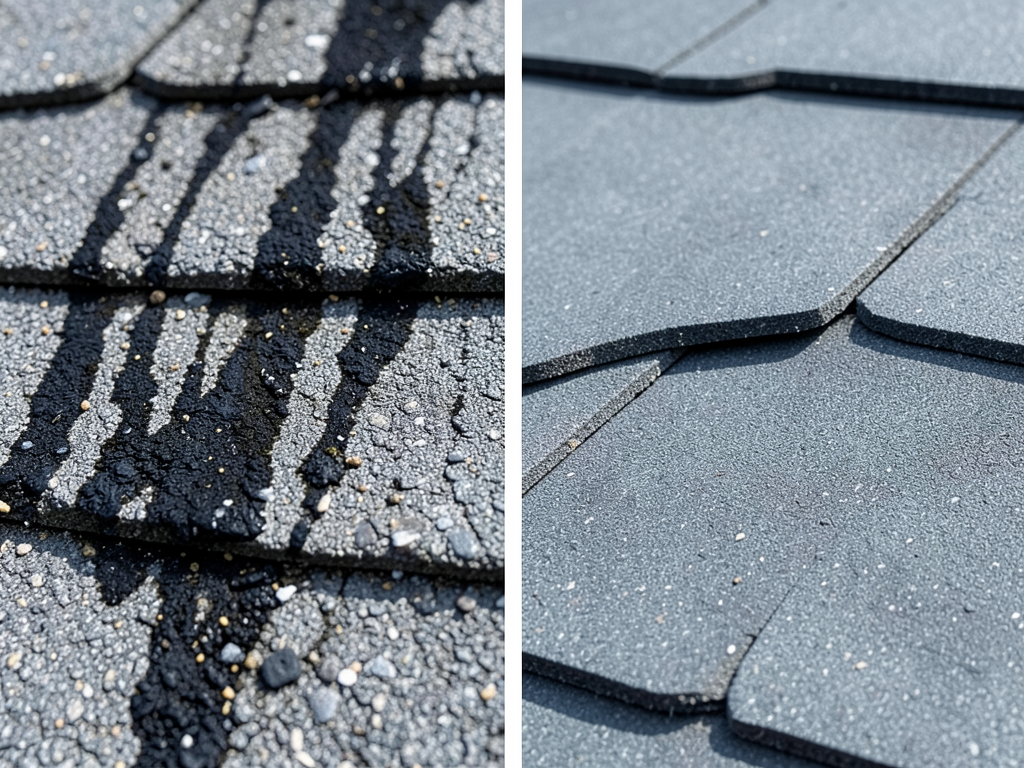
Those dark streaks running down your King William roof aren’t just an eyesore. They’re actually colonies of Gloeocapsa magma, a hardy cyanobacteria that thrives in San Antonio’s humid subtropical climate. What starts as a cosmetic issue quickly becomes a structural and financial nightmare if left untreated. How much a new roof actually costs in San Antonio right now.
Why San Antonio’s climate makes roof algae worse
San Antonio’s combination of high humidity, warm temperatures, and limestone-based asphalt shingles creates the perfect breeding ground for roof algae. The limestone filler in many shingles provides essential nutrients that feed these microorganisms. In neighborhoods like King William with older homes and mature tree cover, conditions are even more favorable for algae growth. How to get your San Antonio roof fixed after a major hail storm.
The problem compounds because algae retain moisture against your roof surface. This trapped moisture accelerates shingle deterioration, particularly during San Antonio’s intense summer heat when temperatures regularly exceed 95 degrees. The thermal expansion and contraction cycle becomes more severe when moisture is trapped beneath the algae layer. What to do when your San Antonio roof starts leaking in the middle of a storm.
The real damage happening beneath those black streaks
Roof algae causes damage that goes far beyond appearance. The microorganisms produce acids that gradually break down the asphalt in your shingles. Over time, this leads to granule loss, which reduces your roof’s ability to reflect UV rays. In San Antonio’s intense sunlight, this means your attic heats up more, forcing your air conditioning to work harder and increasing your energy bills by 10-15%.
The moisture retention also creates an environment where moss and lichen can establish themselves. These organisms have root-like structures that can lift and separate shingles from the roof deck. Once this happens, water infiltration becomes a serious risk during San Antonio’s frequent thunderstorms and occasional hail events. EPA.
Hidden costs homeowners never see coming
Most King William homeowners don’t realize that untreated algae can void their roof warranty. Major shingle manufacturers like GAF and CertainTeed specifically state that algae damage from neglect isn’t covered under standard warranties. This means when you eventually need a replacement due to accelerated deterioration, you’re paying the full cost yourself. Understanding Roof Warranties.
The resale value impact is another hidden cost. Real estate professionals in San Antonio report that homes with visible roof algae can see offers reduced by $5,000 to $15,000 or more. Buyers factor in the immediate cost of cleaning and the reduced remaining lifespan of the roof. In King William’s competitive historic district market, curb appeal matters significantly.
Insurance companies are also paying attention. Some San Antonio insurers have begun requiring documentation of roof maintenance, including algae treatment, before renewing policies on homes over 10 years old. A roof covered in black streaks might trigger a requirement for professional inspection or even lead to coverage denial.
Comparing cleaning methods: why pressure washing is a mistake
| Cleaning Method | Cost Range | Shingle Impact | Effectiveness | San Antonio Suitability |
|---|---|---|---|---|
| Pressure Washing | $0.20-0.40/sq ft | Removes granules, can void warranty | Temporary, strips protective layer | Poor – damages shingles |
| Soft Washing | $0.25-0.45/sq ft | Preserves shingle integrity | Long-lasting, kills algae at root | Excellent – ARMA approved |
| Zinc Strip Installation | $200-400 per strip | No impact, preventive measure | Prevents future growth | Good – works with soft wash |
Pressure washing might seem like the fastest solution, but it’s actually one of the worst things you can do to an asphalt roof in San Antonio. The high-pressure water blasts away the protective granules that shield your shingles from UV damage. Many homeowners discover too late that pressure washing voids their manufacturer warranty, leaving them responsible for premature roof replacement.
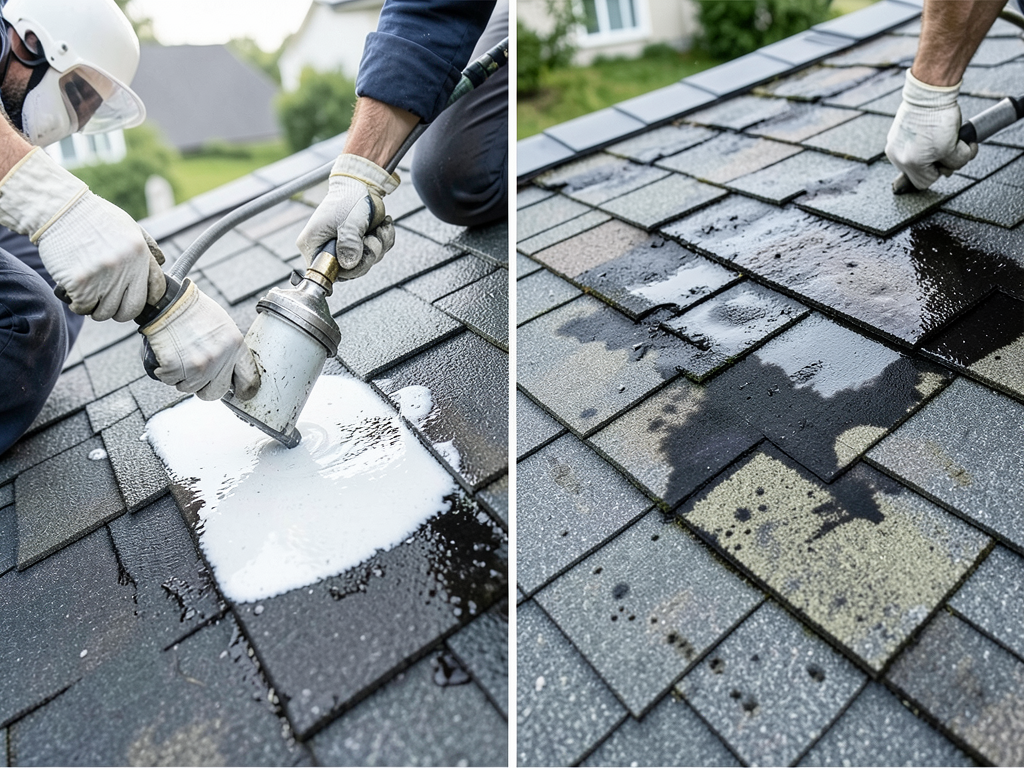
Soft washing uses specialized low-pressure equipment and cleaning solutions that kill algae at the source without damaging shingles. The process typically involves sodium hypochlorite mixed with surfactants that penetrate the algae’s cell walls. When performed correctly by trained technicians, soft washing restores your roof’s appearance while preserving its structural integrity.
The soft washing process: what actually happens
- Inspection and Protection
Technicians assess roof condition, document algae severity, and protect landscaping with tarps. San Antonio’s native plants like Texas sage and lantana are particularly sensitive to cleaning chemicals.
- Application of Cleaning Solution
Low-pressure application of industry-approved cleaning agents specifically formulated for asphalt shingles. The solution typically includes a 3-5% sodium hypochlorite concentration.
- Dwell Time
Solution remains on roof surface for 15-20 minutes to ensure complete algae elimination. During this time, the chemicals break down the algae’s cellular structure.
- Rinse and Neutralization
Low-pressure rinse removes dead algae and residual chemicals. A neutralizing agent may be applied to protect surrounding vegetation and prevent runoff issues.
- Final Inspection
Technician verifies complete algae removal and checks for any shingle damage that may require repair.
Cost factors specific to King William homes
| Cost Factor | Impact on Price | King William Considerations |
|---|---|---|
| Roof Pitch | Steeper = Higher Cost | Many historic homes have steeper pitches |
| Accessibility | Harder Access = More Labor | Narrow historic district streets may limit equipment |
| Algae Severity | Worse = More Chemical | Older roofs in tree-shaded areas need more treatment |
| Roof Size | Larger = More Material | Historic district homes vary widely in size |
| Landscape Protection | Delicate Plants = More Prep | King William’s mature landscaping requires extra care |
King William’s historic district status adds another layer of complexity. Many homes here have architectural features that make roof access more challenging. The narrow streets can limit the size of equipment that can be brought onto the property. Additionally, the mature trees that give the neighborhood its charm also contribute to algae growth by providing shade and dropping organic debris on roofs.
The age of King William homes is another factor. Roofs on properties built before 1950 may have multiple layers of shingles or repairs that aren’t immediately visible from the ground. These hidden issues can affect both the cleaning process and the final cost.
Prevention strategies for San Antonio homeowners
Once your roof is clean, preventing algae recurrence is crucial. Installing copper or zinc strips near the roof peak creates a natural barrier. When it rains, these metals release ions that are toxic to algae and moss. This preventive measure is particularly effective in San Antonio’s climate, where summer thunderstorms provide regular cleansing.
Trimming tree branches that overhang your roof reduces shade and organic debris accumulation. In King William, where mature trees are part of the neighborhood’s character, this requires careful balance between maintaining shade and preventing algae growth. Focus on removing only the branches that directly touch or shade the roof surface.
Improving attic ventilation helps by reducing the moisture that rises from your living space to the roof underside. San Antonio’s humid summers mean attics can reach 150 degrees or higher. Proper ventilation not only prevents algae but also extends shingle life by reducing heat-related deterioration.
Energy efficiency impact you can measure
Black algae streaks do more than look bad. They absorb heat rather than reflecting it, which can raise your attic temperature by 20-30 degrees on sunny days. In San Antonio’s summer climate, this translates to your air conditioning running longer and more frequently. The EPA estimates that reflective roofing can reduce cooling costs by up to 10-15%, and removing heat-absorbing algae is part of that equation.
Homeowners who have their roofs cleaned and treated for algae often notice their homes stay cooler and their AC cycles run less frequently. This is especially noticeable in neighborhoods like King William where many homes have limited tree cover on the south and west exposures, leading to maximum sun exposure during the hottest parts of the day.
Environmental considerations in San Antonio
The cleaning chemicals used in soft washing raise environmental concerns, particularly in San Antonio where the Edwards Aquifer provides drinking water for millions of residents. Professional roof cleaning companies must use EPA-approved biodegradable solutions and implement runoff containment strategies. This is especially important in the King William area, which sits near the Upper San Antonio Watershed.
Many San Antonio homeowners are now asking about eco-friendly alternatives to traditional sodium hypochlorite solutions. Some companies offer oxygen-based cleaners that are less harmful to plants and wildlife but may require more frequent application. The trade-off between environmental impact and cleaning effectiveness is an important consideration for environmentally conscious homeowners.
Timing your roof treatment
In San Antonio’s climate, the best time for algae treatment is during the mild spring or fall months. Summer heat can cause cleaning solutions to evaporate too quickly, reducing effectiveness. Winter cold can slow the chemical reaction needed to kill algae. Spring treatments allow you to address algae before the intense summer heat, while fall treatments prepare your roof for the cooler months when algae growth naturally slows.
Many King William homeowners schedule cleaning in early spring, just before the heavy summer thunderstorm season. This timing ensures your roof is in optimal condition to handle San Antonio’s severe weather patterns, which often include high winds and heavy rainfall that can exploit any weakness in your roofing system.
Insurance and warranty implications
Documenting your roof maintenance, including algae treatment, can be valuable for insurance purposes. Some San Antonio insurance providers offer premium discounts for homes with documented roof maintenance programs. Conversely, visible algae growth might be considered a sign of neglect, potentially affecting your coverage or claims process.
Before scheduling any roof treatment, check your warranty documentation. Some manufacturers require specific cleaning methods to maintain warranty coverage. Using unauthorized cleaning techniques, even with good intentions, could void your warranty and leave you responsible for future repairs.
DIY vs. professional treatment: the hidden risks
Home improvement stores sell roof cleaning products that promise DIY results, but these products often create more problems than they solve. Consumer-grade chemicals may be too harsh for asphalt shingles, and without proper application equipment, you risk damaging your roof or injuring yourself. The height and pitch of many King William homes make DIY roof work particularly dangerous.
Professional roof cleaners carry insurance for both property damage and worker injuries. They also understand how to protect your landscaping, manage chemical runoff, and ensure complete algae removal. The cost difference between DIY and professional service often disappears when you factor in the potential for warranty voidance, property damage, or personal injury.
Long-term cost comparison
| Scenario | 5-Year Cost | 10-Year Cost | Roof Lifespan Impact |
|---|---|---|---|
| Ignore Algae | $0 (initial) | $15,000+ (early replacement) | -40% (7-10 years vs 20-25) |
| DIY Treatment | $300-500/year | $3,000-5,000 | -20% (15-20 years) |
| Professional Soft Wash | $400-600/year | $4,000-6,000 | -5% (18-24 years) |
| Preventive Maintenance | $200-300/year | $2,000-3,000 | 0% (20-25 years) |
The numbers in this comparison assume a typical King William home with a 2,000 square foot roof. Professional soft washing typically needs to be repeated every 3-5 years in San Antonio’s climate, while preventive maintenance with zinc strips might extend that interval to 7-10 years.
Local regulations and compliance
San Antonio’s Unified Development Code includes provisions for roof maintenance in historic districts like King William. While cleaning itself doesn’t require permits, any repairs discovered during the cleaning process might. Additionally, the City of San Antonio has stormwater management regulations that affect how cleaning chemicals can be handled and disposed of.
Professional roof cleaning companies in San Antonio must comply with OSHA safety regulations, including proper fall protection equipment. They also need to follow EPA guidelines for chemical use and disposal. Working with a company familiar with local regulations helps ensure your roof treatment doesn’t create compliance issues. OSHA.
Choosing the right contractor in San Antonio
Not all roof cleaning companies are created equal. Look for contractors who are licensed by the Texas Department of Licensing and Regulation, carry both liability and workers’ compensation insurance, and have specific experience with asphalt shingle maintenance in South Texas. Ask about their cleaning methods and whether they comply with ARMA recommendations.
Request before-and-after photos of local projects, particularly in neighborhoods with similar architectural styles to yours. A reputable company should be able to provide references from King William or nearby historic districts. Also verify that they use professional-grade equipment rather than consumer pressure washers that can damage your roof.
Making the decision: when to act
The right time to address roof algae is before it causes structural damage. If you can see black streaks from the ground, the problem has already progressed beyond the initial stages. In San Antonio’s climate, algae can spread across an entire roof within 2-3 years if left untreated. How to Get Your Commercial Flat Roof Ready for San Antonio Summer Storms.
Consider the age of your roof. If it’s less than 10 years old and in otherwise good condition, professional cleaning and treatment is usually the most cost-effective option. If your roof is approaching the end of its expected lifespan anyway, you might need to weigh the cost of cleaning against the cost of replacement.
The presence of other organisms like moss or lichen indicates more advanced deterioration and should prompt immediate action. These organisms create conditions that accelerate shingle decay and increase the risk of water infiltration during San Antonio’s frequent storms.
Protecting your investment
Your roof is one of your home’s most important protective systems. In San Antonio’s climate, where summer heat and occasional severe storms create constant stress on roofing materials, proactive maintenance is essential. The cost of professional algae treatment is minor compared to the expense of premature roof replacement or water damage repairs.
For King William homeowners, maintaining your roof also means preserving the historic character and value of your property. The neighborhood’s designation as a historic district makes it particularly important to use appropriate maintenance techniques that don’t damage the original roofing materials or architectural features.
Regular roof inspections, prompt algae treatment, and preventive measures like zinc strips can extend your roof’s life by 10-15 years. This not only saves you money but also reduces the environmental impact of early roof replacement and helps maintain property values throughout the historic district.
Frequently Asked Questions
How long does professional roof algae treatment last in San Antonio?
Professional soft washing typically keeps algae away for 3-5 years in San Antonio’s climate. Factors like roof pitch, tree coverage, and whether preventive zinc strips are installed affect longevity. Homes in heavily shaded areas of King William might need treatment every 2-3 years.
Will cleaning my roof damage my landscaping?
Professional roof cleaners use protective measures like tarps and pre-soaking to protect plants. They also use biodegradable cleaning solutions when possible. However, some chemical exposure is possible, so inform your contractor about any particularly valuable or sensitive plants in your King William garden.
Can I clean my roof myself with store-bought products?
While DIY products exist, they often damage shingles or provide only temporary results. Consumer pressure washers can void your warranty by removing protective granules. The height and pitch of many King William homes also make DIY roof work dangerous without proper safety equipment.
How much does professional roof algae removal cost in San Antonio?
Professional soft washing for a typical King William home costs between $400-800, depending on roof size, pitch, and accessibility. Additional costs may apply for zinc strip installation or extensive landscaping protection. This is significantly less than the $8,000-15,000 cost of premature roof replacement due to algae damage.
Does roof algae affect my home insurance?
Some San Antonio insurers consider visible roof algae a sign of poor maintenance and may require documentation of roof care. In historic districts like King William, insurance companies pay particular attention to roof condition when determining coverage and premiums for older homes.
What’s the difference between algae, moss, and lichen?
Algae appears as black streaks and is the least destructive. Moss is green and grows in thick patches, retaining more moisture against shingles. Lichen is a combination of algae and fungus that bonds tightly to shingles. All three require different treatment approaches, with lichen being the most difficult to remove completely.
How do I know if my roof warranty covers algae damage?
Check your warranty documentation or contact the manufacturer. Many modern shingle warranties include algae resistance for 10-25 years, but only if proper maintenance is performed. Using unauthorized cleaning methods or ignoring visible algae growth can void these warranties.
Should I replace my roof or clean it if I have algae?
If your roof is less than 15 years old and the algae is the primary issue, cleaning is usually the better option. However, if you have multiple layers of shingles, visible damage beyond algae, or your roof is over 20 years old, replacement might be more cost-effective long-term.
How does San Antonio’s humidity affect roof algae growth?
San Antonio’s high humidity creates ideal conditions for algae growth, allowing it to spread faster than in drier climates. The combination of warm temperatures and moisture means algae can thrive for most of the year, making preventive measures particularly important for local homeowners.
Can algae treatment help with energy efficiency?
Yes. Black algae streaks absorb heat rather than reflecting it, raising your attic temperature. Removing algae and restoring your roof’s reflective properties can reduce cooling costs by 5-10% during San Antonio’s long summer season, particularly in neighborhoods like King William where many homes lack extensive tree cover.
Take action before the hidden costs multiply
Those black streaks on your King William roof aren’t just cosmetic issues. They’re warning signs of expensive problems developing beneath the surface. Every month you wait allows the algae to spread further, retain more moisture, and cause more damage to your shingles.
Professional roof algae treatment costs a fraction of premature roof replacement. It also protects your home’s value, maintains your warranty coverage, and can even reduce your energy bills. In San Antonio’s harsh climate, proactive roof maintenance isn’t optional it’s essential for protecting your investment.
Don’t let hidden costs eat away at your home’s value and your wallet. Call Summit Roofing San Antonio today at (726) 256-6199 for a free roof inspection and algae treatment estimate. Our experienced technicians understand the unique challenges of maintaining historic homes in King William and throughout the greater San Antonio area. We’ll help you protect your roof, your home, and your peace of mind.
Summit Roofing San Antonio – Serving King William, Alamo Heights, Stone Oak, and all of San Antonio with expert roofing solutions since 2010.
{
“@context”: “https://schema.org”,
“@type”: “BlogPosting”,
“headline”: “The hidden costs of ignoring roof algae and black streaks on your King William home”,
“description”: “Discover the hidden costs of roof algae in San Antonio’s humid climate. Learn why black streaks on your King William home signal expensive problems ahead.”,
“wordCount”: 3043,
“datePublished”: “2026-03-21T10:44:00.000Z”,
“dateModified”: “2026-03-21T10:44:00.000Z”,
“inLanguage”: “en-US”,
“mainEntityOfPage”: {
“@type”: “WebPage”,
“@id”: “https://summitroofingsanantonio.com”
},
“publisher”: {
“@type”: “LocalBusiness”,
“name”: “Summit Roofing San Antonio”,
“url”: “https://summitroofingsanantonio.com”
},
“author”: {
“@type”: “Organization”,
“name”: “Summit Roofing San Antonio”,
“url”: “https://summitroofingsanantonio.com”
},
“image”: {
“@type”: “ImageObject”,
“url”: “https://summitroofingsanantonio.com/wp-content/uploads/2026/03/the-hidden-costs-of-ignoring-roof-algae-and-black-1.png”
}
}
{
“@context”: “https://schema.org”,
“@type”: “RoofingContractor”,
“name”: “Summit Roofing San Antonio”,
“url”: “https://summitroofingsanantonio.com”,
“address”: {
“@type”: “PostalAddress”,
“addressLocality”: “San Antonio”
},
“areaServed”: {
“@type”: “City”,
“name”: “San Antonio”
}
}
{
“@context”: “https://schema.org”,
“@type”: “FAQPage”,
“mainEntity”: [
{
“@type”: “Question”,
“name”: “How long does professional roof algae treatment last in San Antonio?”,
“acceptedAnswer”: {
“@type”: “Answer”,
“text”: “Professional soft washing typically keeps algae away for 3-5 years in San Antonio’s climate. Factors like roof pitch, tree coverage, and whether preventive zinc strips are installed affect longevity. Homes in heavily shaded areas of King William might need treatment every 2-3 years.”
}
},
{
“@type”: “Question”,
“name”: “Will cleaning my roof damage my landscaping?”,
“acceptedAnswer”: {
“@type”: “Answer”,
“text”: “Professional roof cleaners use protective measures like tarps and pre-soaking to protect plants. They also use biodegradable cleaning solutions when possible. However, some chemical exposure is possible, so inform your contractor about any particularly valuable or sensitive plants in your King William garden.”
}
},
{
“@type”: “Question”,
“name”: “Can I clean my roof myself with store-bought products?”,
“acceptedAnswer”: {
“@type”: “Answer”,
“text”: “While DIY products exist, they often damage shingles or provide only temporary results. Consumer pressure washers can void your warranty by removing protective granules. The height and pitch of many King William homes also make DIY roof work dangerous without proper safety equipment.”
}
},
{
“@type”: “Question”,
“name”: “How much does professional roof algae removal cost in San Antonio?”,
“acceptedAnswer”: {
“@type”: “Answer”,
“text”: “Professional soft washing for a typical King William home costs between $400-800, depending on roof size, pitch, and accessibility. Additional costs may apply for zinc strip installation or extensive landscaping protection. This is significantly less than the $8,000-15,000 cost of premature roof replacement due to algae damage.”
}
},
{
“@type”: “Question”,
“name”: “Does roof algae affect my home insurance?”,
“acceptedAnswer”: {
“@type”: “Answer”,
“text”: “Some San Antonio insurers consider visible roof algae a sign of poor maintenance and may require documentation of roof care. In historic districts like King William, insurance companies pay particular attention to roof condition when determining coverage and premiums for older homes.”
}
},
{
“@type”: “Question”,
“name”: “What’s the difference between algae, moss, and lichen?”,
“acceptedAnswer”: {
“@type”: “Answer”,
“text”: “Algae appears as black streaks and is the least destructive. Moss is green and grows in thick patches, retaining more moisture against shingles. Lichen is a combination of algae and fungus that bonds tightly to shingles. All three require different treatment approaches, with lichen being the most difficult to remove completely.”
}
},
{
“@type”: “Question”,
“name”: “How do I know if my roof warranty covers algae damage?”,
“acceptedAnswer”: {
“@type”: “Answer”,
“text”: “Check your warranty documentation or contact the manufacturer. Many modern shingle warranties include algae resistance for 10-25 years, but only if proper maintenance is performed. Using unauthorized cleaning methods or ignoring visible algae growth can void these warranties.”
}
},
{
“@type”: “Question”,
“name”: “Should I replace my roof or clean it if I have algae?”,
“acceptedAnswer”: {
“@type”: “Answer”,
“text”: “If your roof is less than 15 years old and the algae is the primary issue, cleaning is usually the better option. However, if you have multiple layers of shingles, visible damage beyond algae, or your roof is over 20 years old, replacement might be more cost-effective long-term.”
}
},
{
“@type”: “Question”,
“name”: “How does San Antonio’s humidity affect roof algae growth?”,
“acceptedAnswer”: {
“@type”: “Answer”,
“text”: “San Antonio’s high humidity creates ideal conditions for algae growth, allowing it to spread faster than in drier climates. The combination of warm temperatures and moisture means algae can thrive for most of the year, making preventive measures particularly important for local homeowners.”
}
},
{
“@type”: “Question”,
“name”: “Can algae treatment help with energy efficiency?”,
“acceptedAnswer”: {
“@type”: “Answer”,
“text”: “Yes. Black algae streaks absorb heat rather than reflecting it, raising your attic temperature. Removing algae and restoring your roof’s reflective properties can reduce cooling costs by 5-10% during San Antonio’s long summer season, particularly in neighborhoods like King William where many homes lack extensive tree cover.”
}
}
]
}
{
“@context”: “https://schema.org”,
“@type”: “HowTo”,
“name”: “Professional Roof Algae Treatment”,
“step”: [
{
“@type”: “HowToStep”,
“position”: 1,
“name”: “Inspection and Protection”,
“text”: “Technicians assess roof condition, document algae severity, and protect landscaping with tarps. San Antonio’s native plants like Texas sage and lantana are particularly sensitive to cleaning chemicals.”
},
{
“@type”: “HowToStep”,
“position”: 2,
“name”: “Application of Cleaning Solution”,
“text”: “Low-pressure application of industry-approved cleaning agents specifically formulated for asphalt shingles. The solution typically includes a 3-5% sodium hypochlorite concentration.”
},
{
“@type”: “HowToStep”,
“position”: 3,
“name”: “Dwell Time”,
“text”: “Solution remains on roof surface for 15-20 minutes to ensure complete algae elimination. During this time, the chemicals break down the algae’s cellular structure.”
},
{
“@type”: “HowToStep”,
“position”: 4,
“name”: “Rinse and Neutralization”,
“text”: “Low-pressure rinse removes dead algae and residual chemicals. A neutralizing agent may be applied to protect surrounding vegetation and prevent runoff issues.”
},
{
“@type”: “HowToStep”,
“position”: 5,
“name”: “Final Inspection”,
“text”: “Technician verifies complete algae removal and checks for any shingle damage that may require repair.”
}
],
“image”: “https://summitroofingsanantonio.com/wp-content/uploads/2026/03/the-hidden-costs-of-ignoring-roof-algae-and-black-1.png”
}
{
“@context”: “https://schema.org”,
“@type”: “BreadcrumbList”,
“itemListElement”: [
{
“@type”: “ListItem”,
“position”: 1,
“name”: “Home”,
“item”: “https://summitroofingsanantonio.com”
},
{
“@type”: “ListItem”,
“position”: 2,
“name”: “Blog”,
“item”: “https://summitroofingsanantonio.com/blog”
},
{
“@type”: “ListItem”,
“position”: 3,
“name”: “The hidden costs of ignoring roof algae and black streaks on your King William home”
}
]
}
{
“@context”: “https://schema.org”,
“@type”: “Service”,
“serviceType”: “Roofing”,
“provider”: {
“@type”: “LocalBusiness”,
“name”: “Summit Roofing San Antonio”,
“url”: “https://summitroofingsanantonio.com”
},
“areaServed”: {
“@type”: “City”,
“name”: “San Antonio”
},
“description”: “Discover the hidden costs of roof algae in San Antonio’s humid climate. Learn why black streaks on your King William home signal expensive problems ahead.”
}